

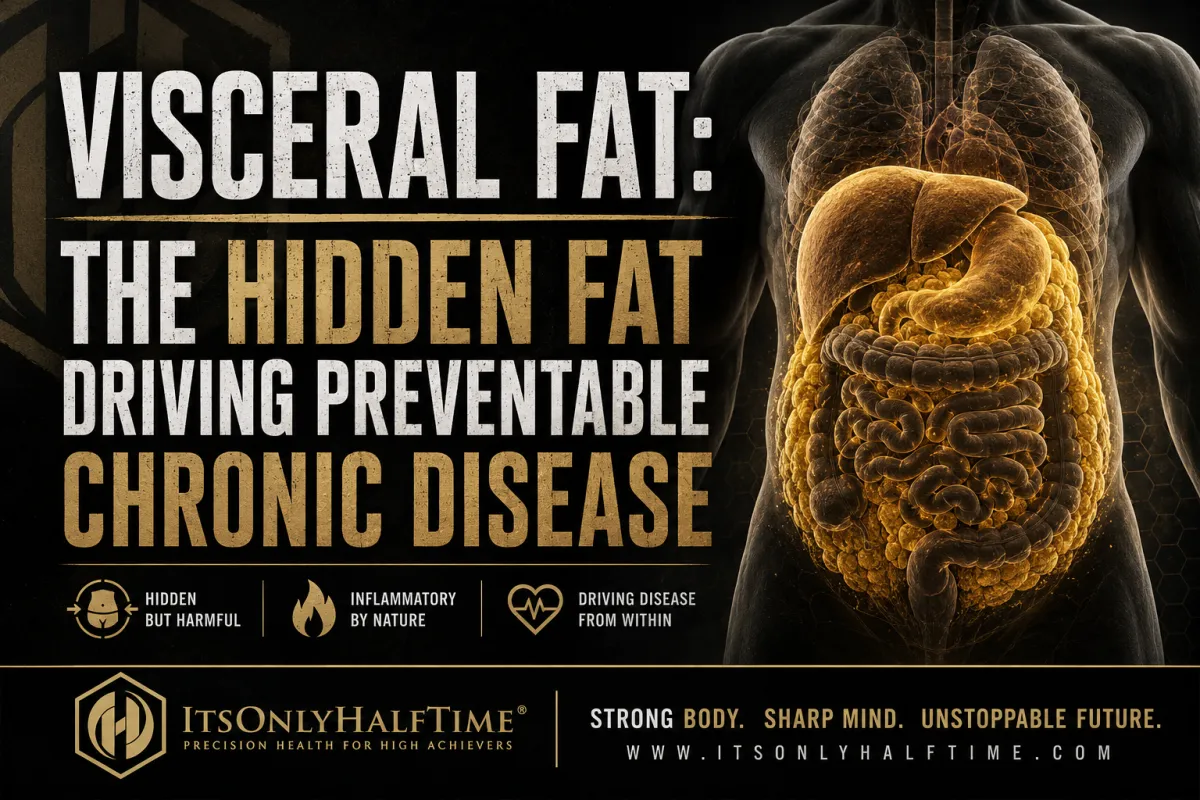
Visceral Fat: The Hidden Fat Driving Preventable Chronic Disease
The Fat You Can't See Is the Fat That's Killing You
By Dr. Andreas Boettcher, D.C., CFMP, B.S. Health/Exercise Science
3x Ironman Triathlete, Master's Men's Physique Competitor & Medication FREE at 56
Most people think about body fat as something they can see.
The fat under the skin. The fat that changes the way clothes fit. The fat that shows up in the mirror at 6 a.m. and decides how the rest of the day is going to feel.
That's subcutaneous fat. It has its own metabolic implications — but it is not the fat quietly driving the chronic disease epidemic.
The dangerous fat is the fat you cannot see.
It sits deep inside the abdominal cavity, wrapping around the liver, the pancreas, the intestines, the kidneys, and the heart. It fills the spaces between organs that were never designed to accommodate it. It infiltrates the liver itself, the muscle tissue, the heart muscle, the bone marrow.
It is visceral fat.
And it is not simply stored energy waiting to be burned. It is an active, endocrine, inflammatory organ — producing hormones, inflammatory cytokines, and signaling molecules that systematically disrupt metabolism, immune function, hormonal balance, cardiovascular health, cognitive function, and cancer risk in ways the medical conversation about obesity almost entirely fails to capture.
Here is what that means in practice.
The man who appears lean but carries significant visceral fat — TOFI: thin outside, fat inside— may be at substantially higher metabolic risk than a heavier man with predominantly subcutaneous fat and minimal visceral accumulation.
The man who loses weight on the scale but never addresses the drivers of visceral fat accumulation may be shedding subcutaneous fat while visceral fat persists — improving his appearance while the most metabolically dangerous fat depot in his body remains completely untouched.
This is not an article about losing weight.
This is an article about understanding what visceral fat actually is, what it actually does, why it accumulates, and what genuinely drives its reduction — at the biological level the calorie-counting conversation almost entirely misses.
What Visceral Fat Actually Is
Adipose tissue is not uniform across the body.
Different fat depots have dramatically different cellular compositions, metabolic activities, blood supplies, innervation patterns, and endocrine functions. Those differences produce dramatically different health consequences depending on where fat accumulates.
Subcutaneous fat — beneath the skin
The largest fat depot in most people, accounting for roughly 80% of total body fat
Distributed across the entire body surface — abdomen, thighs, buttocks, arms, face
Metabolically relatively inert compared to visceral fat
Contains a higher proportion of large, unilocular fat cells that store triglycerides efficiently
Has a lower density of inflammatory immune cells than visceral fat
Gluteal and femoral subcutaneous fat — the fat of the hips, buttocks, and thighs — may actually be metabolicallyprotective, sequestering fatty acids and inflammatory lipids away from visceral organs
Not strongly associated with metabolic disease independent of visceral fat
Visceral fat — inside the abdominal cavity
Surrounds the abdominal organs, particularly concentrated in the omentum (the fatty apron hanging from the stomach and large intestine) and the mesenteric fat surrounding the intestines
Also found as perivascular fat, pericardial fat, and perirenal fat
Drains directly into the portal vein— delivering its metabolic products straight to the liver before they ever reach systemic circulation. This single anatomical feature is one of the most important determinants of visceral fat's metabolic impact
Far more lipolytically active than subcutaneous fat, releasing free fatty acids into the portal circulation at rates that dramatically exceed subcutaneous fat
Contains a higher density of inflammatory immune cells — particularly macrophages in the inflammatory M1 state
Has a higher density of glucocorticoid receptors and androgen receptors, making it uniquely responsive to cortisol and sex hormone changes
Produces a distinctsecretome— the collection of hormones, cytokines, and signaling molecules secreted by adipose tissue — that is substantially more inflammatory and metabolically disruptive than that of subcutaneous fat
Ectopic fat — fat in places it should not be
Intrahepatic fat— fat within liver cells; the defining feature of non-alcoholic fatty liver disease (NAFLD)
Intramyocellular fat— fat within muscle cells; directly impairs insulin signaling in muscle
Epicardial fat— fat within and surrounding the heart muscle; associated with coronary artery disease and atrial fibrillation
Pancreatic fat— impairs beta cell function and insulin secretion
Bone marrow fat— replaces hematopoietic tissue; associated with reduced immune cell production and bone fragility
Ectopic fat is the most extreme expression of the metabolic overflow that visceral fat represents. When the visceral compartment and its capacity to buffer excess lipid are overwhelmed, fat begins depositing in organs that have no adipose function and suffer significant functional impairment when infiltrated.
The omentum — ground zero
The omentum — the large sheet of fatty tissue hanging from the greater curvature of the stomach — is the primary site of visceral fat accumulation and the most metabolically active fat depot in the body.
It receives a rich blood supply and has direct lymphatic connections to the gut immune system. It contains a high density of immune cells — macrophages, mast cells, T cells — that create a pro-inflammatory milieueven before significant fat accumulation.
The omentum's immune function originally evolved to respond to peritoneal infections. That makes it uniquely sensitive to gut-derived inflammatory signals. As gut dysbiosis and intestinal permeability drive LPS into the portal circulation, the omentum's immune cells are continuously activated.
As visceral fat accumulates there, macrophage density increases dramatically, inflammatory cytokine production escalates, and the omentum transitions from a peripheral immune organ into a primary driver of systemic metabolic inflammation.
What Visceral Fat Actually Does
This is the section that transforms visceral fat from a cosmetic concern into a fundamental health issue.
Free fatty acid flooding — the portal vein problem
The most immediate and most consequential metabolic effect of visceral fat is its continuous release of free fatty acids (FFAs) directly into the portal vein.
Visceral fat is significantly more lipolytically active than subcutaneous fat. It breaks down stored triglycerides to release FFAs at a higher rate per unit of fat mass. Those FFAs drain directly into the portal vein, delivering them to the liver at concentrations far exceeding what the liver was designed to handle.
The liver responds by:
Increasing triglyceride synthesis— packaging the excess FFAs into VLDL particles released into the blood. Elevated triglycerides are one of the most consistent markers of visceral fat accumulation
Increasing hepatic glucose production— FFAs stimulate gluconeogenesis even when blood glucose is already adequate, driving fasting hyperglycemia
Developing hepatic insulin resistance— excess FFA accumulation in hepatocytes directly impairs insulin receptor signaling
Accumulating intrahepatic fat— when FFA delivery exceeds the liver's capacity to export as VLDL, fat accumulates within liver cells, producing NAFLD
Increasing inflammatory cytokine production— fatty liver activates Kupffer cells that produce IL-6 and TNF-alpha, amplifying systemic inflammation
The visceral fat secretome
Visceral fat adipocytes and the immune cells within them collectively produce a secretome far more inflammatory and metabolically disruptive than that of subcutaneous fat.
Adipokines produced by visceral fat:
Leptin— produced in excess proportional to fat mass. Chronically elevated leptin drives receptor desensitization: the brain stops hearing the satiety signal, and hunger becomes uncoupled from energy status
Resistin— promotes insulin resistance in liver and muscle; reduces insulin receptor sensitivity; production is higher in visceral than subcutaneous fat
Visfatin— produced primarily by visceral fat; promotes inflammation through NF-κB activation; elevated in metabolic syndrome, type 2 diabetes, and cardiovascular disease
Chemerin— recruits macrophages and dendritic cells into adipose tissue, amplifying inflammatory immune infiltration; also impairs insulin signaling in muscle and liver
PAI-1— inhibits fibrinolysis (the breakdown of blood clots). Elevated PAI-1 from visceral fat is a primary mechanism connecting visceral adiposity to cardiovascular thrombotic risk
Angiotensinogen— the precursor to angiotensin II; contributes to the hypertension associated with visceral adiposity through local renin-angiotensin activation
Anti-inflammatory adipokines reduced by visceral fat expansion:
Adiponectin— the most important anti-inflammatory and insulin-sensitizing adipokine. Inversely proportional to visceral fat mass. As visceral fat increases, adiponectin falls. Low adiponectin is one of the most consistent markersand driversof insulin resistance, metabolic syndrome, and cardiovascular risk
Omentin-1— an anti-inflammatory adipokine produced by visceral fat stromal cells; declines as visceral fat expands, removing a natural insulin-sensitizing signal
Inflammatory cytokines produced by visceral fat immune cells:
TNF-alpha— produced by visceral fat macrophages at levels roughly 7–10x higher than subcutaneous fat macrophages; directly induces insulin resistance through serine phosphorylation of IRS-1
IL-6— produced at roughly 3–4x the level of subcutaneous fat; reaches the liver through portal drainage where it stimulates CRP production and hepatic insulin resistance
IL-1beta— produced via NLRP3 inflammasome activation; directly toxic to pancreatic beta cells; one of the mechanisms driving progression from insulin resistance to type 2 diabetes
MCP-1— recruits more monocytes into visceral fat, converting them to macrophages, amplifying inflammatory infiltration in a self-reinforcing cycle
Visceral fat and insulin resistance — the central connection
Visceral fat is both a cause and a consequence of insulin resistance, creating one of the most powerful self-reinforcing cycles in metabolic disease.
How visceral fat drives insulin resistance:
FFA flooding of the liver produces hepatic insulin resistance through direct lipotoxic impairment of insulin receptor signaling
TNF-alpha and IL-6 produce peripheral insulin resistance in muscle and fat through serine phosphorylation of IRS-1
Resistin and visfatin directly reduce insulin receptor sensitivity
Intramyocellular lipid from visceral fat overflow impairs insulin-stimulated GLUT4 translocation in muscle
Reduced adiponectin removes the primary natural insulin-sensitizing signal
How insulin resistance drives visceral fat accumulation:
Hyperinsulinemia directly promotes visceral fat deposition — insulin is a potent lipogenic hormone, and chronically elevated insulin shifts the metabolic balance toward storage rather than oxidation
Hyperinsulinemia promotes hepatic lipogenesis, producing the VLDL particles that deliver triglycerides to adipose tissue
Insulin resistance impairs hormone-sensitive lipase — the primary fat-releasing enzyme — reducing the ability to mobilize fat even during a caloric deficit
The cycle:more insulin resistance → more hyperinsulinemia → more visceral fat → more insulin resistance.
This is one of the primary reasons visceral fat is so resistant to simple caloric restriction. The hormonal environment of insulin resistance actively resists fat mobilizationregardless of caloric intake.
Visceral fat and cardiovascular disease
Visceral fat is one of the strongest independent risk factors for cardiovascular disease, and its mechanisms extend far beyond cholesterol and blood pressure:
Atherogenic lipid profile— elevated triglycerides, reduced HDL, elevated small dense LDL. This triad is more predictive of cardiovascular events than total cholesterol or LDL alone
Endothelial dysfunction— TNF-alpha and IL-6 reduce nitric oxide production, impairing vascular relaxation and promoting the endothelial dysfunction that precedes atherosclerosis
Elevated PAI-1— impairs fibrinolysis and increases thrombotic risk
Hypertension— angiotensinogen from visceral fat contributes to renin-angiotensin activation; visceral fat-driven sympathetic activation raises blood pressure through catecholamine excess
Pericardial fat— directly infiltrates the myocardium; associated with coronary artery disease, left ventricular hypertrophy, atrial fibrillation, and heart failure independent of other risk factors
Systemic inflammation— elevated hs-CRP from visceral fat-driven IL-6 is among the strongest independent cardiovascular risk predictors; Framingham data demonstrated that elevated CRP predicts cardiovascular events independent of LDL
Visceral fat and the brain
Neuroinflammation— TNF-alpha and IL-6 cross the blood-brain barrier at circumventricular organs and through cytokine transporters, activating microglia and producing the neuroinflammation that impairs cognition, drives depression, and accelerates neurodegeneration
Brain insulin resistance— impairs hippocampal neuroplasticity, memory consolidation, and executive function. "Type 3 diabetes" as a framework for Alzheimer's is directly connected to the brain insulin resistance visceral fat drives
Hypothalamic leptin resistance— produces a confused hunger and metabolism signal that perpetuates further accumulation
HPA axis dysregulation— visceral fat expresses high levels of 11-beta-HSD1, the enzyme converting inactive cortisone to active cortisolwithin adipose tissue. Visceral fat essentially amplifies local cortisol signaling independently of systemic cortisol levels, promoting further accumulation through glucocorticoid receptor activation
Sleep disruption— visceral fat is strongly associated with sleep apnea through mechanical airway compression and inflammatory airway narrowing. Sleep apnea then further drives visceral fat through cortisol elevation, ghrelin increase, and leptin reduction — another self-reinforcing cycle
Dementia risk— multiple large population studies document visceral adiposity as an independent risk factor for Alzheimer's and vascular dementia
Visceral fat and cancer
One of the least discussed but most important consequences.
Visceral fat is associated with significantly increased risk of colorectal, postmenopausal breast, endometrial, pancreatic, liver, and kidney cancer —independent of BMI.
The mechanisms:
Chronic inflammation— TNF-alpha and IL-6 promote the inflammatory tumor microenvironment supporting cancer initiation and progression
Hyperinsulinemia and IGF-1— potent mitogenic signals that promote cellular proliferation and suppress apoptosis
Estrogen production— visceral fat contains aromatase, the enzyme converting androgens to estrogen. It is a significant estrogen source in both postmenopausal women and men. Estrogen-driven cancers are directly promoted by this excess
Adiponectin deficiency— adiponectin has anti-tumor properties through AMPK activation and anti-angiogenic effects; its reduction removes a natural anti-cancer signal
Impaired immune surveillance— chronic immune activation drives NK cell exhaustion and T cell dysfunction
Visceral fat and hormonal disruption
In men:
Aromatase in visceral fat converts testosterone to estrogen — reducing free testosterone while elevating estrogen. This is one of the most important mechanisms of the hypogonadism of obesity
Elevated estrogen further suppresses LH through negative feedback on the HPG axis, reducing testicular testosterone production
Visceral fat-driven inflammation directly impairs Leydig cell testosterone production
Sleep apnea from visceral fat reduces the nocturnal growth hormone and testosterone pulses that depend on deep sleep
In women:
Aromatase activity converts androgens to estrogen, contributing to estrogen dominance while reducing testosterone
Elevated leptin disrupts GnRH pulsatility, impairing LH and FSH signaling and contributing to ovulatory dysfunction
Visceral fat-driven insulin resistance promotes hyperandrogenism through stimulation of ovarian androgen production — a primary mechanism in PCOS
Reduced progesterone relative to estrogen produces the estrogen dominance pattern underlying heavy periods, PMS, fibrocystic breasts, and endometrial proliferation
What Drives Visceral Fat Accumulation
Understanding whatcausesvisceral fat to accumulate — beyond simple caloric excess — is essential, because the therapeutic approach must address the drivers, not the symptoms.
1. Chronic cortisol elevation — the primary driver
Visceral fat has a uniquely high density of glucocorticoid receptors compared to subcutaneous fat. It is disproportionately responsive to cortisol. Chronic cortisol elevation selectively drives visceral fat accumulationregardless of caloric intake.
Cortisol directly promotes adipogenesis and lipogenesis in visceral depots through glucocorticoid receptor activation
Cortisol promotes lipolysis in peripheral fat while promoting storage in central fat — actively shifting fat distribution toward the visceral pattern
Cortisol elevates blood glucose through gluconeogenesis, driving the hyperinsulinemia that further promotes visceral deposition
11-beta-HSD1 in visceral fat amplifies local cortisol — visceral fat creates its own cortisol-rich microenvironment independent of circulating levels
The sources of chronic cortisol elevation:
Psychological stress — the most obvious and most consistently underestimated driver
Sleep deprivation
Blood sugar dysregulation — reactive hypoglycemia triggers cortisol as a counter-regulatory response
Chronic pain
Chronic infection and inflammation — immune activation drives cortisol through cytokine-HPA cross-talk
Caloric restriction itself— severe restriction is a physiological stressor that elevates cortisol. This is one reason aggressive dieting can paradoxically increase visceral fat relative to subcutaneous fat
2. Hyperinsulinemia and insulin resistance
The dietary drivers of chronic hyperinsulinemia:
Refined carbohydrates— white bread, white rice, pasta, breakfast cereals; rapidly absorbed glucose producing large insulin spikes
Fructose— particularly from HFCS and sugar-sweetened beverages. Fructose is metabolized primarily in the liver; liver fructose metabolism directly promotes hepatic lipogenesis and drives visceral fat through VLDL overproduction
Frequent eating— every eating episode stimulates insulin. Chronic meal frequency maintains chronic insulin elevation, preventing the fat mobilization that requires low insulin
Ultra-processed food broadly— the combination of refined carbohydrates, fructose, seed oils, and additives produces the most insulinogenic and most visceral-fat-promoting dietary pattern documented
3. Sleep deprivation
Cortisol elevation— selectively promotes visceral deposition
Ghrelin elevation— drives intake toward the high-glycemic comfort foods that most aggressively promote visceral fat
Leptin reduction— reducing satiety signals
Growth hormone suppression— GH is primarily secreted during deep sleep and has direct lipolytic effects on visceral fat
Insulin resistance— even one week of mild sleep restriction produces measurable insulin resistance
Circadian misalignment— eating late at night, when peripheral insulin sensitivity is reduced, drives calories toward visceral storage rather than metabolic utilization
4. Gut dysbiosis and intestinal permeability
The gut-visceral fat axis is bidirectional and profound.
LPS from dysbiosis and leaky gut reaches the omentum through portal circulation, activating omental macrophages and promoting the inflammatory adipose phenotype
Specific bacteria promote accumulation: certain Firmicutes species harvest more energy from food; reduced butyrate production impairs the AMPK activation that promotes fat oxidation; Bacteroidetes reduction is consistently associated with visceral adiposity
Dysbiosis-driven bile acid dysregulation impairs the FXR and TGR5 signaling that regulates fat metabolism
Gut-derived LPS directly produces insulin resistance through TLR4 activation
The effect is direct enough that germ-free mice transplanted with microbiomes from obese humans gain significantly more visceral fat than those receiving microbiomes from lean humans — demonstrating direct microbiome causality
5. Dietary pattern
Fructose— the most potent dietary driver of visceral and hepatic fat. It bypasses the appetite-regulatory systems that normally limit glucose intake and is metabolized directly to fat in the liver. Even at equivalent caloric intake, fructose produces more visceral fat than glucose
Industrial seed oils— excess omega-6 promotes adipose tissue inflammation and impairs fat oxidation
Refined carbohydrates— through hyperinsulinemia
Ultra-processed food— through hyperinsulinemia, gut dysbiosis, chronic inflammation, and direct appetite disruption
Alcohol— cortisol elevation, fructose-like hepatic metabolism, appetite disruption. The "beer belly" is a direct reflection of alcohol's visceral fat-promoting effects
6. Sedentary lifestyle
Reduced AMPK activation— exercise activates AMPK, which promotes fat oxidation and reduces visceral fat
Reduced muscle insulin sensitivity— skeletal muscle is the primary glucose-consuming tissue; sedentary muscle becomes insulin resistant, driving glucose toward fat storage
Reduced growth hormone
Prolonged sitting specifically— independent of total exercise volume. Even people who exercise regularly but sit most of the day show greater visceral fat than active non-exercisers. The mechanisms involve reduced lipoprotein lipase activity and reduced local metabolic activity in tissues that aren't contracting
7. Environmental toxins — the obesogen connection
BPA and phthalates— activate PPAR-gamma, the master adipogenic transcription factor; reduce adiponectin; impair thyroid function
Tributyltin— one of the most potent known obesogens; activates both PPAR-gamma and RXR at extremely low concentrations
Organochlorine pesticides (PCBs, DDT/DDE)— accumulate in adipose tissue; impair thyroid function; promote insulin resistance; reduce adiponectin
Phthalates— through anti-androgenic effects, promote the hormonal environment associated with visceral fat accumulation in men
Glyphosate— disrupts the gut microbiome and promotes the metabolic endotoxemia that drives visceral fat through inflammation-driven insulin resistance
8. Sex hormone changes
Menopause— the decline in estrogen shifts fat distribution from the gynoid (hip and thigh) pattern to the android (visceral) pattern. Postmenopausal women experience dramatic increases in visceral fatwith no change in total body fat mass
Low testosterone in men— testosterone promotes fat oxidation and inhibits visceral accumulation. The relationship is bidirectional: visceral fat reduces testosterone through aromatase and inflammatory Leydig cell suppression, while low testosterone promotes visceral fat accumulation
Elevated cortisol relative to DHEA— the ratio shifts toward cortisol with aging and chronic stress. DHEA has anti-glucocorticoid effects at the adipose tissue level; declining DHEA removes a natural protection
Progesterone deficiency— progesterone opposes the lipogenic effects of cortisol and estrogen
How to Measure Visceral Fat
Standard body weight and BMI do not measure visceral fat. Their failure to capture visceral distribution is one of the most significant limitations of conventional metabolic risk assessment.
Waist circumference: Most accessible clinical proxy; measured at the umbilicus Elevated risk: >37 in (men), >31.5 in (women). High risk: >40 in (men), >34.6 in (women)
Waist-to-hip ratio: Captures android vs gynoid distribution>0.90 (men), >0.85 (women) indicates abdominal adiposity
Waist-to-height ratio: Most predictive simple anthropometric measure of visceral-related CV riskTarget below 0.5 — waist less than half your height
DEXA scan: Fat mass, lean mass, bone density with regional distribution. Most accessible clinical body composition measure
CT scan: Gold standard for direct quantificationPrecise cross-sectional visceral vs subcutaneous areas
MRI: Most comprehensive distribution assessment, no radiationPrimarily research
Bioimpedance: Consumer smart scales and handhelds. Accuracy varies significantly between devices
Biomarker proxies
When elevated in combination, these blood markers suggest significant visceral fat even without imaging:
Fasting triglycerides above 150 mg/dL— directly reflects hepatic VLDL overproduction from portal FFA flooding
HDL below 40 mg/dL (men) or 50 mg/dL (women)— reduced by visceral fat-driven inflammation and CETP activity
Fasting insulin above 10 mU/L— reflects the hyperinsulinemia both driving and driven by visceral fat
hs-CRP above 1 mg/L— reflects the IL-6-driven hepatic acute phase response
GGT elevation— one of the most sensitive early markers of hepatic fat accumulation and oxidative stress
Uric acid above 5.5 mg/dL— produced by fructose metabolism; consistently associated with visceral fat and metabolic syndrome
Low adiponectin— where testable, the most direct biomarker of visceral fat-driven metabolic dysfunction
A metabolic syndrome diagnosis — three or more of elevated waist circumference, elevated triglycerides, low HDL, elevated blood pressure, elevated fasting glucose — is essentially a clinical diagnosis of significant visceral fat accumulation and its consequences.
What Actually Reduces Visceral Fat
Here is the critical distinction:visceral fat responds differently to different interventions than subcutaneous fat.Some interventions that reduce overall weight preferentially reduce subcutaneous fat. The interventions most effective for visceral fat specifically are not always the most aggressive caloric ones.
1. Cortisol reduction — the most important non-exercise intervention
Given that cortisol is the primary hormonal driver of visceral accumulation, cortisol reduction is arguably the single most important visceral fat intervention that is consistently overlooked in weight management conversations.
Sleep 7–9 hours at consistent timing— the most powerful cortisol-normalizing intervention available. The cortisol awakening response normalizes with adequate, consistent sleep in ways no supplement can replicate
Treat stress management as a metabolic intervention, not a lifestyle nicety — breathwork, somatic practice, vagal tone work, therapeutic relationship
Avoid severe caloric restriction— aggressive deficit elevates cortisol substantially. A moderate deficit preserves the cortisol-to-growth-hormone balance that allows visceral mobilization rather than driving further cortisol-mediated accumulation
Stabilize blood sugar— preventing reactive hypoglycemia removes one of the most consistent daytime cortisol triggers
Ashwagandha (KSM-66)— 300mg twice daily; the most evidence-supported adaptogen for cortisol reduction, with multiple RCTs showing cortisol reduction and associated visceral fat reduction
Phosphatidylserine— 300–400mg daily; blunts the cortisol response to exercise-induced and psychological stress
IOH support for this layer: AdrenaCortex — Stress, Energy & Inflammatory Support and Adrenal Support are formulated for HPA axis support. Daily Balance+ for Stress, Anxiety & Weight Loss Support and Overdrive Relief — Calming Stress Support target the daytime stress load. Calm & Focus Powderis the evening wind-down option.
2. Zone 2 aerobic exercise — the most effective exercise for visceral fat
Not all exercise affects visceral fat equally. The evidence for zone 2 (moderate intensity, conversational pace) aerobic exercise is more consistent than for any other modality.
Zone 2 primarily burns fat as fuel through mitochondrial beta-oxidation, specifically mobilizing visceral fat through catecholamine-mediated lipolysis in visceral adipocytes
Multiple meta-analyses confirm aerobic exercise reduces visceral fat significantlyeven without caloric restriction— and more than strength training alone at equivalent time investment
The STRRIDE trial documented aerobic exercise reducing visceral fat in sedentary overweight adults without dietary changes
Mechanism:activates AMPK (reducing lipogenesis, promoting fat oxidation); increases growth hormone release (promoting visceral lipolysis); improves insulin sensitivity; reduces cortisol over chronic exposure while providing an appropriate acute pulse
Prescription:150–300 minutes weekly at conversational pace — able to speak in full sentences. Walking, cycling, swimming, rowing. The modality matters less than the intensity and the consistency
Resistance training as an essential compliment. It does not preferentially reduce visceral fat acutely, but it is essential long-term:
Muscle mass maintenance— muscle is the primary glucose-consuming tissue; preserved or increased muscle improves insulin sensitivity and reduces the hyperinsulinemia driving visceral fat
Post-exercise energy expenditure— elevated metabolic rate for hours after training
Growth hormone— resistance training produces the most potent acute GH pulse of any modality
2–3 sessions weekly alongside zone 2 produces the most comprehensive reduction
A note on HIIT.HIIT produces significant visceral fat reduction and is more time-efficient than zone 2 in some studies. But HIIT elevates cortisol acutely more than zone 2. In individuals with already-elevated cortisol — high stress, poor sleep, HPA dysregulation — HIIT may paradoxically maintain visceral fat through cortisol-driven deposition. HIIT is most effective in those with adequate sleep, managed stress, and stable adrenal function. For everyone else, zone 2 is the safer path.
IOH support for this layer: Pure Creatine and Whey Protein (orVegan Protein) support the lean mass that drives long-term insulin sensitivity. Catalyst — Electrolyte Complex and 5X Chelated Minerals cover training-related mineral loss. The Ultimate Peak Performance Pre-Workout for training energy without the stimulant crash that adds to the cortisol load.
3. Dietary reconstruction
Eliminate fructose— particularly sugar-sweetened beverages, HFCS, and concentrated fruit products. Fructose is the single most potent dietary driver of visceral and hepatic fat; its elimination produces visceral reduction disproportionate to the caloric change
Time-restricted eating— a 14–16 hour fasting window. Multiple studies document preferential visceral fat reduction with TRE even without caloric restriction. Mechanisms include growth hormone elevation during the fasting window, AMPK activation, insulin reduction, and Akkermansia-mediated metabolic improvement
Mediterranean dietary pattern— the most consistently evidence-supported pattern for visceral reduction. Olive oil polyphenols reduce adipose inflammation; omega-3 from fish promotes adiponectin and reduces inflammatory macrophage content; diverse plant polyphenols support the microbiome associated with reduced visceral adiposity
Reduce refined carbohydrates and industrial seed oils
Adequate protein— 1.6–2g per kilogram of bodyweight daily. The most satiating macronutrient; preserves lean mass during fat loss; reduces cortisol-driven muscle breakdown
Polyphenol richness— quercetin, resveratrol, curcumin, EGCG, berberine all reduce visceral fat in human and animal studies through AMPK activation, adiponectin increase, and visceral macrophage polarization toward the M2 phenotype
IOH support for this layer: Blood Sugar Support+ and GlucoLipid — Blood Sugar and Lipid Support target the hyperinsulinemia driving visceral deposition. Super Greens Concentrate helps close the polyphenol gap. Protein targets get easier with Whey Protein,Vegan Protein, or Collagen Peptides Plus.
4. Sleep restoration — non-negotiable
The sleep-visceral fat connection is bidirectional. Poor sleep drives visceral fat through cortisol, ghrelin, reduced GH, and insulin resistance. Visceral fat drives poor sleep through sleep apnea, nocturnal cortisol elevation, and inflammatory disruption.
Breaking the cycle requires treating sleep as a primary metabolic intervention:
Consistent sleep and wake times— the circadian anchor normalizing the cortisol awakening response and the overnight GH pulse
Complete darkness, cool room (62–66°F / 17–19°C)— supporting the deep sleep architecture in which GH is secreted and visceral fat is mobilized
Screens off 90+ minutes before bed
Sleep apnea assessment and treatment— treating apnea consistently reduces visceral fat even without other interventions
Morning bright light— anchors the circadian rhythm determining cortisol patterning 16 hours later
IOH support for this layer: Unwind Herbal Blend,Melatonin 3mg, 5-HTP with P5P & Glycine, and Inositol Powder for sleep architecture support. Magnesium via 5X Chelated Minerals.
5. Gut restoration — addressing the LPS-visceral fat axis
Diverse fermentable fiber— 30+ plant species weekly; increases butyrate-producing bacteria that reduce the endotoxemia driving visceral inflammation
Akkermansia restoration— time-restricted eating, pomegranate polyphenols, targeted probiotics. Akkermansia specifically reduces metabolic endotoxemia and is consistently associated with reduced visceral fat
Barrier repair— L-glutamine, zinc L-carnosine, quercetin; removing the portal LPS that activates omental macrophages
Fermented foods daily— kefir, kimchi, sauerkraut, kombucha. The Stanford fermented food trial showed fermented foods reduced inflammatory markers through microbiome diversification
Saccharomyces boulardii— directly reduces gut permeability and LPS translocation
IOH support for this layer: Gut RestoreX — Ultimate Microbiome Barrier Support and Total Gut Support Formula for barrier repair. Probiotic 40 — 40 Billion CFU for microbiome diversity. AceX Glutamine for the L-glutamine layer specifically.GI Clear Elite and Clear Gut where dysbiosis is the presenting issue.
6. Targeted supplementation for visceral fat
Berberine— 500mg twice daily with meals. AMPK activation. The most evidence-supported supplement for visceral fat reduction, with multiple RCTs showing reduction comparable to metformin. Also reduces hepatic fat, improves insulin sensitivity, and modulates the gut microbiome toward compositions associated with reduced visceral adiposity. →IOH Berberine — Ultra High Potency
EGCG (green tea extract)— 400–800mg daily. AMPK activation and catecholamine-mediated fat oxidation. Multiple human studies show preferential visceral reduction; the EGCG + caffeine combination outperforms either alone. →Clean Sculpt — Natural Thermogenic
Omega-3 EPA/DHA— 3–4g daily. Reduces visceral adipose inflammation, promotes adiponectin, improves insulin sensitivity. →Omega 3 TS — Heart, Brain & Inflammatory Support
Vitamin D3 to 50–80 ng/mL— deficiency is consistently associated with visceral adiposity; vitamin D receptors in adipose tissue regulate adipogenesis. Supplementation has shown visceral reduction in deficient individuals across multiple RCTs. →D3 & K2 — 5000 IU D3, 300 mcg K2
Magnesium— 400mg daily. Deficiency promotes both insulin resistance and cortisol elevation. →5X Chelated Minerals
Ashwagandha (KSM-66)— 300mg twice daily. Multiple RCTs show significant visceral fat and body weight reduction in chronically stressed adults — through cortisol-mediated rather than caloric mechanisms. →AdrenaCortex/Adrenal Support
Targeted probiotics—Lactobacillus gasseriSBT2055 is the most consistently documented strain for visceral reduction, with multiple Japanese RCTs showing significant reduction over 12 weeks via bile acid modulation and reduction of gut-derived inflammatory signals. →Probiotic 40
Curcumin and resveratrol— reduce NF-κB in visceral adipose tissue, promote M2 macrophage polarization, reduce TNF-alpha and IL-6 output, and promote adiponectin production via SIRT1. →Infla-Mend — Natural Inflammatory SupportandUltra Cell Defense — Super Antioxidant Complex
Liver and mitochondrial support— the liver-visceral fat connection means hepatic support directly benefits visceral management. →CellCore ELITE,MitoHealth,NAD Catalyst
7. Hormone optimization
Testosterone optimization in men— addressing the visceral fat–testosterone negative feedback cycle. Lifestyle first: sleep, exercise, stress management, zinc, vitamin D. Then evaluation for hypogonadism if lifestyle optimization proves insufficient →Amplify T — Natural Testosterone SupportorThe Ultimate Natural Testosterone Support Stack
Estrogen-progesterone balance in women— addressing estrogen dominance through liver support (DIM, calcium D-glucarate, sulforaphane), and hormone evaluation in perimenopause and postmenopause →DIM+,4Her,MenoRelieve
DHEA— consider testing and supplementation with documented deficiency. DHEA's anti-glucocorticoid effects at the adipose tissue level directly oppose cortisol-driven visceral deposition →DHEA 25mg,IOH Pregnenolone
Growth hormone optimization through lifestyle— deep sleep, fasting periods, resistance exercise. GH is the primary hormonal driver of visceral fat mobilization
8. Toxin reduction — removing the obesogen burden
Filter drinking and cooking water
Glass and stainless steel food storage — eliminating the primary route of BPA and phthalate exposure from food contact
Organic for the Dirty Dozen — reducing the organochlorine accumulation that impairs thyroid function
Natural personal care products — reducing phthalate and paraben dermal absorption
Support hepatic detoxification— visceral fat accumulates obesogens disproportionately. Supporting Phase 1 and Phase 2 detoxification through cruciferous vegetables (DIM, sulforaphane), milk thistle, NAC, and GlyNAC promotes the obesogen clearance that allows adipose tissue to contract
Infrared sauna— 3–4 sessions weekly, 20–30 minutes at therapeutic temperatures
IOH support for this layer: NAC 90 for glutathione production, Detox Binder for mobilized toxin capture,DIM+ for Phase 2 estrogen clearance, Liposomal Vitamin C and Herbal Cleanse for broader detoxification support.
The Deeper Truth
Visceral fat is not the inevitable consequence of eating too much and moving too little.
It is the metabolic signature of a body under chronic physiological siege.
Cortisol continuously elevated by chronic stress — telling visceral adipocytes to store rather than release.
Insulin chronically elevated by refined carbohydrates and fructose — driving lipogenesis in the very depots where fat causes the most harm.
Gut bacteria depleted of the diversity that regulates endotoxemia — flooding the portal circulation with LPS that activates the omental macrophages driving visceral inflammation.
Sex hormones disrupted by environmental obesogens, endocrine disruptors, and the aromatase activity of the visceral fat that is already there — perpetuating the very hormonal environment that drives further accumulation.
Sleep disrupted by the sleep apnea that visceral fat causes — removing the growth hormone pulse and the deep sleep cortisol normalization that would otherwise mobilize the fat during the night.
This is not a simple problem of energy balance. It is a complex, multi-system, self-reinforcing metabolic syndrome — with specific, identifiable drivers, each of which must be addressed for genuine reduction to occur.
The man who cuts calories aggressively without addressing cortisol will find that stress hormones mobilize subcutaneous fat while visceral fat persists — protected by the very cortisol excess that drove its accumulation.
The man who exercises intensely without fixing sleep will find that high-cortisol training in a sleep-deprived, HPA-dysregulated body produces inconsistent or counterproductive results.
The man who eats perfectly but continues consuming fructose in fruit juices, condiments, and "healthy" sweetened products will find that hepatic lipogenesis continues driving accumulation regardless of caloric content.
The path to visceral fat reduction is not more aggressive restriction.
It is the systematic removal of the hormonal, inflammatory, microbial, and toxic drivers telling the body to store fat in precisely the place that does the most damage.
Address the cortisol. Fix the sleep. Restore the gut. Reduce the insulin. Move the body — consistently, at an intensity that heals rather than stresses.
And the visceral fat — no longer sustained by the physiological signals that created it — will do what biology intends when the terrain is restored.
It will go.
⚡️ Ready To Take Charge of Your Health With the Most Comprehensive Natural Approach to Mens Health?
If you'd like to go deeper — to uncover the root causes behind your energy, hormones, metabolism, and performance — I invite you to book a complimentary consultation.
Together, we'll review your health history and goals and determine if our Wealthy Body Protocol based on your lab analysis, genetics, and lifestyle data is right for you!
👉Click here to apply: limited clients accepted each quarter
To learn more about our Wealthy Body Protocol and success stories visitwww.ItsOnlyHalftime.com/wbp, where we help men like you turn your second half into your best half naturally!
Finish Strong,
Dr. Andreas
Still Kickin' A** Medication Free at 56 Despite What the "Narrative" Would Like You To Believe!

Medical Disclaimer:
The information provided in this article is for educational and informational purposes only and is not intended as medical advice. It should not replace professional consultation, diagnosis, or treatment. Always consult your healthcare provider before making any changes to your health regimen or lifestyle.