

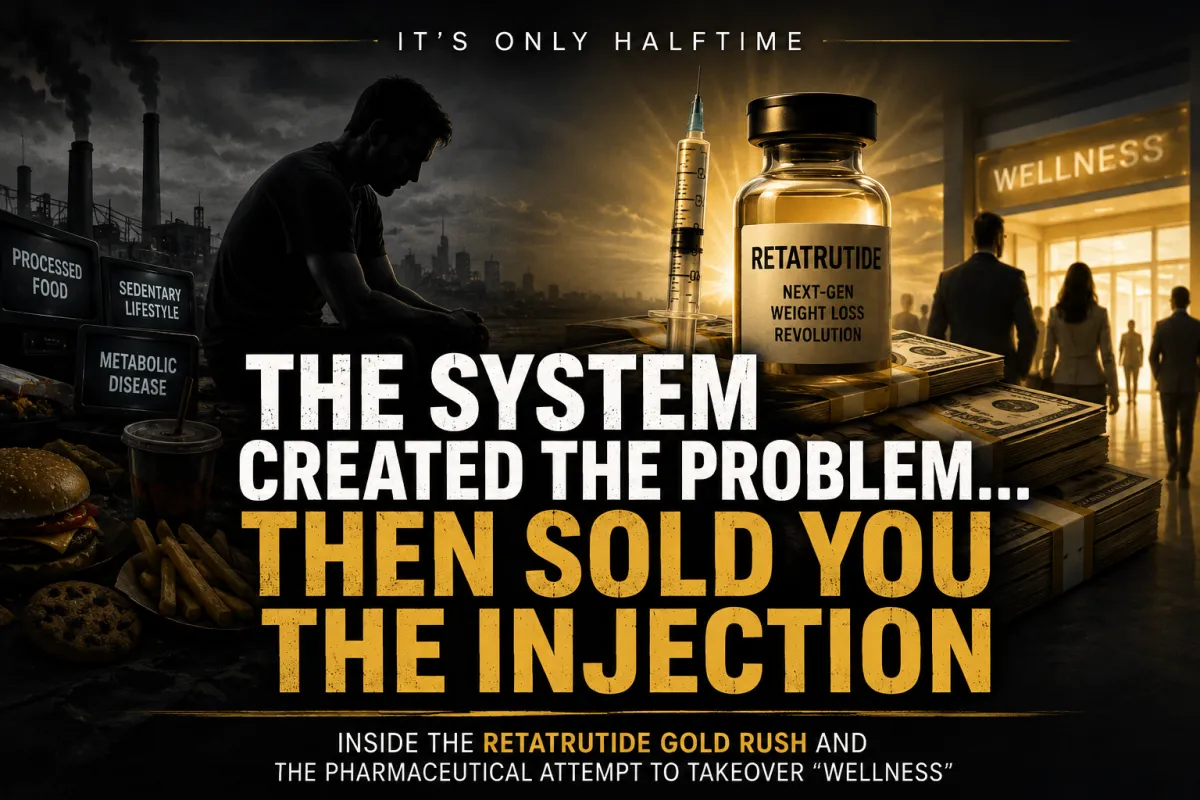
“The System Created the Problem… Then Sold You the Injection” Inside the Retatrutide Gold Rush and the Pharmaceutical Attempt to Takeover "Wellness"
Why the biggest weight-loss wave in modern medicine is about to crash into the wall of long-term outcomes — and why the men who do the work will be the ones still standing on the other side.
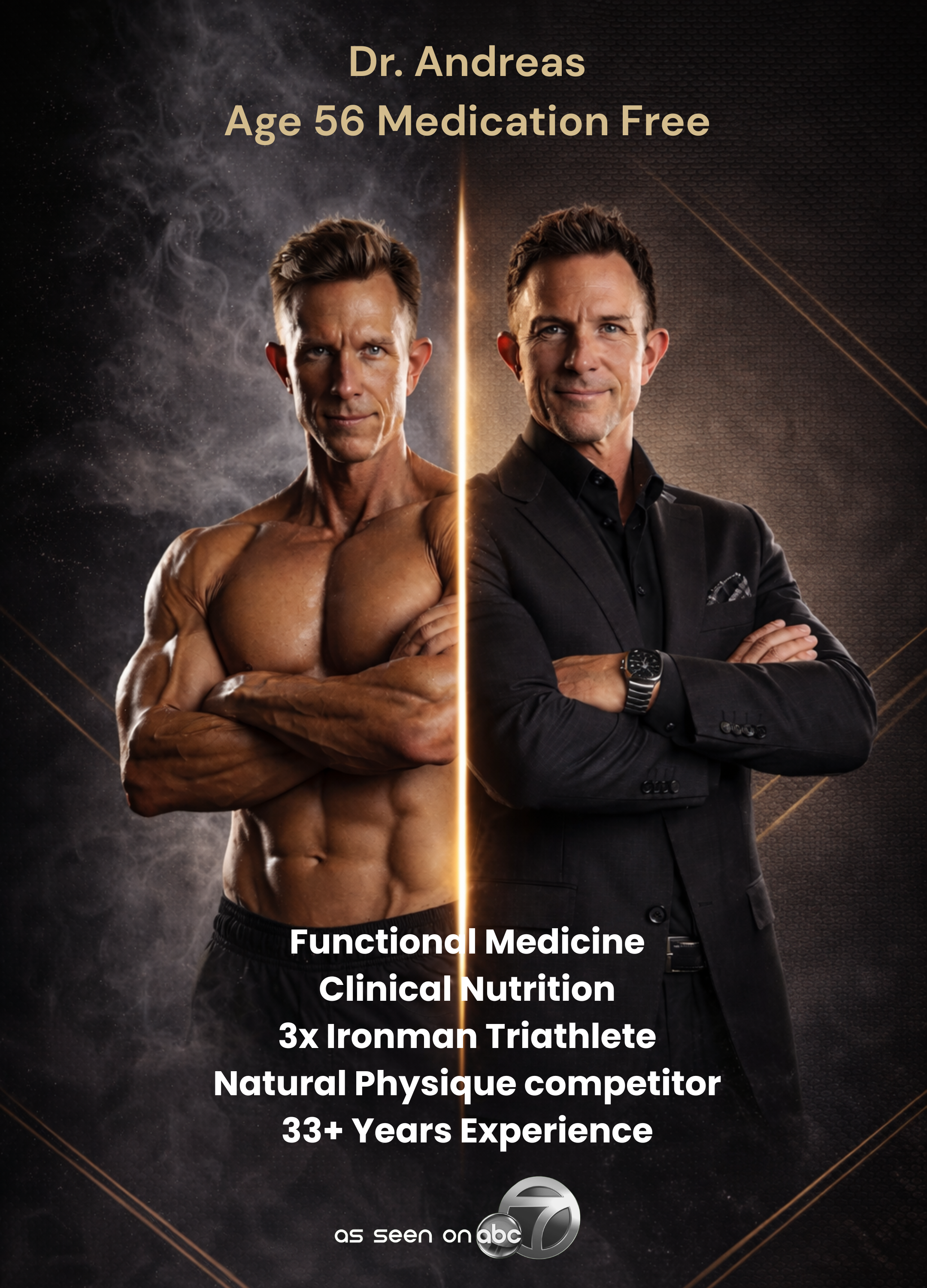
By Dr. Andreas Boettcher, D.C., Functional Medicine, B.S. Health/Exercise Science
3x Ironman Triathlete, Master's Men's Physique Competitor & Medication FREE at 56
Let me tell you what I see right now from my desk in Sarasota.
I see a country chasing a shortcut. I see executives, founders, advisors — men who built businesses by doing the hard, unglamorous work nobody else wanted to do — suddenly reaching for the easiest answer their doctor has ever written on a prescription pad. I see medical professionals who used to roll their eyes at "wellness" stampeding into the optimization space because, for the first time in their careers, they have something they can prescribe for the forty-eight-year-old executive who walks in twenty pounds overweight, fatigued, and pre-diabetic.
I see telehealth clinics with two-minute intake forms turning weight-loss medicine into a subscription service. I see board-certified MDs running glossy gold-on-black Instagram carousels declaring a new injectable drug the "king of obesity treatment" and "the best-selling drug of all time" — three days after the press release dropped, before a single long-term outcome has been measured. I see an entire industry rebranding itself around a single class of drugs.
And I see something else, too. I see the data starting to turn. I see the system that created this disease pretending it's also going to cure it. And I see who profits at every step of that closed loop.
I'm going to walk you through what's actually happening with semaglutide, tirzepatide, and the new triple-agonist retatrutide. I'm going to show you the numbers nobody on Instagram is showing you — the lean-mass loss, the discontinuation cliff, the rebound, the side-effect signals stacking up in the post-marketing data, the true cost across a decade, and the next class of drugs being developed right now to fix the problems this class created.
I'm going to break down the marketing of these drugs, slide by slide, and what each slide is leaving out. I'm going to name the system that created the disease this drug claims to treat. I'm going to confront the most manipulative lie at the heart of the industry — the one that says you've already tried everything and nothing works. I'm going to show you, point by point, how every single benefit these drugs claim is achievable through the work, with none of the risk and none of the cost. And I'm going to tell you what we are actually doing to our children.
There is no biological shortcut. There never was. And the men who pretended otherwise are about to find that out.
The wave: what's actually happening
Let's start with what's true, because I won't insult you by pretending the drugs don't work. They do — for what they do.
Semaglutide (sold as Ozempic and Wegovy) was the opening act. In the registration trials, it produced roughly 15% body-weight loss at 68 weeks. Tirzepatide (Mounjaro and Zepbound) is a dual GLP-1/GIP agonist and lifted the ceiling — about 21% at the highest dose. And now Eli Lilly's retatrutide, a triple agonist that hits the GLP-1, GIP, and glucagon receptors simultaneously, just produced phase-3 results that are genuinely unprecedented in the history of weight-loss pharmacology. In the TRIUMPH-1 trial reported this month, the highest dose drove an average 28.3% body-weight reduction at 80 weeks — about 70 pounds — with 45% of participants losing 30% or more of their starting body weight. The extension cohort, followed out to 104 weeks, hit 30.3% — roughly 85 pounds. That is bariatric-surgery territory, achieved with a once-weekly injection.
I want you to sit with that for a moment, because I don't want you thinking I'm dismissing the magnitude of what these molecules can do on a scale. They are the most effective scale-moving drugs in metabolic history. Anyone who pretends otherwise isn't reading the literature.
But weight on a scale is not health. And weight loss is not the same thing as fat loss. And short-term efficacy in a controlled clinical trial is not the same thing as long-term outcomes in a real human life lived across a decade or three.
So let's open the hood and look at what these drugs are actually doing inside the body of the man taking them.
The closed loop: how the system makes you sick and then sells you the cure
Before we get any further into the pharmacology, I want you to step back and look at the entire economic machine, because the drug is the last link in a chain. The chain matters more than the link.
Here is the chain.
Big Food spent forty years engineering the American diet for maximum shelf life, maximum profit margin, and — critically — maximum consumption. Ultra-processed foods are formulated to override the body's natural satiety signaling. The combination of refined carbohydrates, industrial seed oils, refined sugars, and engineered flavor compounds is not an accident. It is the output of billions of dollars of food-science research, much of it borrowed directly from the tobacco industry's playbook on engineered addiction. You did not "lose control" around the bag of chips. The bag of chips was designed, at a molecular and neurological level, to make you lose control. Your great-grandfather did not need willpower to stop at one cookie because the cookie he ate did not contain the formulation that defeats willpower.
The dietary guidelines that ostensibly protect Americans were, for forty years, written by committees with deep financial entanglements to that same food industry. Whole grains, low-fat, high-carbohydrate eating patterns that were promoted as the path to cardiovascular health turned out — when the actual outcome data came in — to track with the steepest climb in obesity, type 2 diabetes, and metabolic syndrome in modern human history. The "food pyramid" was a marketing document for the agricultural-industrial complex masquerading as nutrition policy.
Then the sick-care system metabolizes the human consequences of that food environment for profit. Type 2 diabetes is a billion-dollar disease — diagnostic tests, insulin, oral hypoglycemics, complication management, dialysis, amputations, the entire industrial supply chain of metabolic failure. Cardiovascular disease is a billion-dollar disease. Fatty liver, sleep apnea, joint replacement, depression, erectile dysfunction — every downstream consequence of the food environment is its own profit center, with its own specialist, its own drug class, its own quarterly earnings report.
And now the pharmaceutical industry arrives with the GLP-1 class — promoted as the cure to the very disease the system created, sold back to the same patients, at $400 a month, for life. Same patients. Same parent companies in many cases. Same incentive structure. Different invoice.
This is not a conspiracy theory. This is industrial economics. You do not need anyone in a smoke-filled room. You just need three sectors — food, sick care, and pharma — whose economic interests align around exactly the same outcome: a population that gets sicker over time, develops chronic conditions that require lifetime management, and consumes both the food that drives the disease and the medications that treat its consequences.
The system is not broken. It is working exactly as designed. The product is your chronic disease. You are not the customer. You are the inventory.
When you understand this, the Lilly carousel I'm about to deconstruct stops looking like enthusiastic medical communication and starts looking like exactly what it is: the launch marketing of the most lucrative chronic-disease subscription in the history of pharmaceutical commerce, brought to you by the same broad ecosystem that engineered the disease in the first place.
That is the chain. The drug is the last link. And we are about to spend the next decade pretending the link is a miracle while ignoring the chain that made it inevitable.
How the marketing actually works: a slide-by-slide breakdown
Within seventy-two hours of Lilly's May 21st press release on retatrutide, my feed filled up with the exact same template — credentialed physicians, gold-on-black design systems, ten-slide Instagram carousels declaring retatrutide the new "king of obesity treatment." One of them, from a board-certified MD at a major academic medical center with hundreds of thousands of followers, was so polished it could have come straight from Lilly's brand team.
I want to take you through what those slides say, and more importantly, what they leave out — because once you see the pattern, you cannot unsee it.
Slide 1: "Retatrutide Phase 3 trial just dropped. The results are genuinely insane. 30% weight loss — may make all other GLP-1s obsolete." Translation: the scale number is unprecedented. What's missing: any mention of what tissue the weight came from, what happens when patients stop, or what the drug costs across a lifetime.
Slides 2, 3, 4: 28.3% average body weight loss. 70.3 lbs on average. Nearly half achieved ≥30% weight loss. 30.3% at 104 weeks — about 85 lbs on average. All true. All scale numbers. None of these slides report body composition. None report what fraction of that 70 or 85 pounds was muscle versus fat. None acknowledge that prior GLP-1 trials lost 25-45% of weight from lean mass and that no published retatrutide body-composition data has been released for the TRIUMPH-1 cohort.
Slide 5: "65.3% of participants on 12 mg dropped below the obesity BMI threshold. We're not just improving weight. We're REVERSING disease classification." This is the most quietly dangerous slide in the deck. It treats BMI as the disease. BMI is a height-weight ratio that does not distinguish between fat and muscle. If you lose 30 pounds of fat and 10 pounds of muscle, you "reverse" your BMI classification. You have not reversed your disease. You have changed a number on a chart while losing structural tissue that determines whether you survive your seventies.
Slide 6: "Powerful results even at lower dose. 4mg over 80 weeks. 19% weight loss. 47.2 lbs. Fewer discontinuations than placebo: 4.1% vs 4.9%." That 4.1% discontinuation number is from a controlled trial environment where participants receive ongoing physician contact, dose titration support, free medication, and the social accountability of being in a study. The real-world discontinuation rate for non-diabetic GLP-1 users sits at roughly 65% at one year and 84% at two years. Read those two numbers again — 4.1% in the trial, 84% in real life. That is the gap between the marketing and the reality.
Slide 7: "Beyond weight loss: better metabolic health. Blood pressure ↓. Triglycerides ↓. Non-HDL cholesterol ↓. Waist circumference ↓. hsCRP (inflammation) ↓. "Here is where I want you to pay very close attention. Every single one of these biomarker improvements — blood pressure, triglycerides, cholesterol, waist circumference, inflammation — is achievable through diet, training, sleep, hormone optimization, and stress management. I have watched men in my practice produce more impressive shifts on every one of these markers in twelve weeks of disciplined work than what the retatrutide trial produced over 80 weeks. And the difference is that the improvements I produce in my clients persist for the rest of their lives because they own the mechanism. The improvements the drug produces vanish the day the prescription stops being filled. You are not buying metabolic health. You are renting the appearance of it at $400 a month, for as long as you keep paying rent.
Slide 8: "Safety you can trust. No cardiac safety signals. No liver safety signals. For this level of efficacy, safety matters." This is the slide that, as a physician, makes me genuinely angry. The trial is 80 weeks long. The drug has not been on the market a single day. The UK regulator just updated GLP-1 safety information after 574 cases of acute pancreatitis and ten deaths linked to existing GLP-1 drugs thatalsohad clean cardiac and liver signals at 80 weeks. NAION — sudden vision loss — is now in multi-district litigation against Lilly and Novo Nordisk forpreviousGLP-1 drugs thatalsohad clean cardiac and liver signals at 80 weeks. Gastroparesis label updates came after 80-week-clean drugs went into the real world. "No safety signals at 80 weeks" is a true statement and a meaningless one. The safety signals for this entire drug class have, without exception, emerged in years 3, 4, and 5 of real-world post-marketing surveillance — not in the registration trials.
Slide 9: "A new king of obesity treatment? Retatrutide is poised to take the throne. Triple agonist. Unprecedented weight loss. Powerful metabolic benefits. Strong safety profile. This could be the best-selling drug of all time." That last line is, I'm afraid, almost certainly true. And it tells you everything about why this carousel exists. The best-selling drug of all time is currently Humira, which generated over $200 billion in lifetime sales. Retatrutide is positioned to dwarf that. The market capitalization arithmetic of getting a triple-agonist injection into 50 million Americans for 30 years is one of the largest financial events in the history of pharmaceutical commerce. Every credentialed physician promoting this drug on Instagram is participating, knowingly or not, in the launch marketing of that financial event.
That is the carousel. Ten slides. Hundreds of thousands of views. Zero mention of lean mass, body composition, discontinuation reality, rebound dynamics, lifetime cost, or the muscle-preservation follow-on drugs Lilly isalreadydeveloping because they know — they know — what this drug class does to skeletal muscle.
When a marketing campaign omits the same five facts every single time, those five facts are the story. Everything else is the noise designed to keep you from finding them.
The most manipulative lie in the industry: "you've tried everything and nothing works"
I need to confront this one directly, because it is the single most effective conversion tool in the GLP-1 marketing playbook, and it is profoundly dishonest.
The pitch goes like this.We understand. You've tried every diet. You've tried every exercise program. You've tried Whole30 and keto and intermittent fasting and CrossFit and Peloton and trainers and apps. Nothing has worked. Your body is broken. Your genetics are against you. Obesity is a chronic disease and you are not at fault. You deserve a real medical solution.
Every part of that pitch is engineered to do one thing: absolve the patient of responsibility, while simultaneously rendering them a permanent subscriber.
Let me say what almost no one in this space will say out loud, because saying it costs you popularity in a culture that has decided personal responsibility is unkind.
If you were actually doing everything right, you would not be in the position you are in.
That is not cruelty. That is biology. The human body, given adequate protein, real food, sufficient sleep, consistent movement under load, intelligent stress management, and optimized hormonal status, defaults toward metabolic health. The reason your body is not doing that is not because the system is broken. It is because one or more of those inputs is missing — and usually more than one.
When a man tells me he has "tried everything," what he actually means, when we walk through it together, is some version of this:
He has tried a series of two-week extreme diets that he could not sustain, separated by months of returning to the food environment that made him sick in the first place.
He has done sporadic cardio without any meaningful resistance training, so his lean mass has been declining for two decades while his fat mass has been accumulating.
He is sleeping six hours a night and calling it adequate because his calendar will not permit more.
He is eating "healthy" foods that are still ultra-processed — protein bars, low-fat yogurt, "natural" granola, restaurant salads dressed with industrial seed oils.
He has never had his hormones properly evaluated. His testosterone has been declining since forty, his cortisol pattern is wrecked from chronic stress, his thyroid has not been looked at with a full panel, and no one has measured his inflammatory markers or his apoB.
He has been working with a primary care physician who has fifteen minutes per visit, who has never asked him a single question about his sleep, his stress, his training, or his protein intake.
That is not "trying everything." That is trying a series of disconnected, half-implemented, non-personalized interventions inside a sick-care system that is structurally incapable of delivering the work that would actually matter.
You have not failed. You have never been given the protocol that could succeed. Those are not the same thing, and the industry profits enormously from making sure you confuse them.
Every single biomarker improvement those carousel slides celebrate — the blood pressure, the triglycerides, the cholesterol, the waist circumference, the inflammation, even meaningful and sustainable weight loss — is achievable through disciplined, intelligent, properly programmed lifestyle work. I have produced those exact shifts, in my own body and in the bodies of the men I serve, without a single injection. The data showing that diet, exercise, sleep, and stress management produce dramatic improvements in every one of these markers has existed for decades. None of it is mysterious. None of it is contested. None of it is held back by missing science.
What is held back is the work. And the industry has decided to monetize your reluctance to do it.
The drug is not the answer to the problem. The drug is the answer to the question,how do we make money on a population that has been told it cannot solve its own problem?That is a different question with a different answer.
The buried lede: where the weight is actually coming from
Here is the question almost no one is asking in the breathless Instagram coverage: when a man on retatrutide loses 70 or 85 pounds, what tissue is he actually losing?
The answer, from the registration trials of the prior drugs in this class, is uncomfortable.
In the STEP-1 trial of semaglutide, participants lost roughly 15 kilograms of body weight. Of that loss, approximately 6.9 kilograms — about 45%— came from lean body mass. Read that again. Almost half the weight lost on semaglutide in the pivotal trial was not fat. It was muscle. It was bone density. It was organ tissue. It was the structural and metabolic infrastructure that keeps you alive, mobile, strong, and resilient.
Tirzepatide does somewhat better — in SURMOUNT-1, the lean-mass fraction was closer to 25-34%. But the real-world data emerging in 2026 is actually worse than the trials suggested. A recent analysis of more than 670,000 patients on these drugs found that roughly one in ten tirzepatide users developed what researchers called a "depletive metabotype" — more than 20% body-weight loss with more than 5% lean mass loss in a single year. One in ten.
Now, why does this matter? Why am I spending so much time on this particular point?
Because muscle is the organ of longevity.
It is the largest endocrine organ in your body. It is the primary site of glucose disposal and the engine of your metabolic rate. It is the structural reserve that determines whether you survive a hospitalization at sixty-five or seventy. It is the reason a strong sixty-year-old can carry a grandchild upstairs and the reason a weak sixty-year-old falls and breaks a hip. The single best predictor of all-cause mortality in men over fifty is not body fat percentage. It is muscle mass, grip strength, and walking speed.
And we are now writing prescriptions, at scale, for a class of drugs in which 25 to 45% of the weight lost is the very tissue that determines how long and how well you will live.
You don't want to lose weight. You want to lose fat. Those are not the same project. And the drug doesn't know the difference.
The retatrutide data is even more troubling on this dimension because of the magnitudes involved. A 240-pound man losing 28.3% of his body weight on retatrutide is losing roughly 68 pounds total. If the lean-mass fraction tracks with semaglutide (and there's no reason to believe a more aggressive appetite-suppressing agent will perform better), 25 to 30 of those pounds are structural tissue he will not get back without years of deliberate, intelligent work. The 268-pound man in the trial extension cohort who lost 85 pounds is potentially looking at 35 to 40 pounds of lean tissue loss.
This is the part of the story that does not appear in a single one of the ten slides in that carousel.
The pharmaceutical treadmill: how the next drug is already being built to fix this one
Here is where the story gets predictable, if you've watched this industry long enough.
A new drug class enters the market with extraordinary efficacy and a clean safety profile in controlled trials. It becomes a blockbuster. Real-world use exposes side effects the trials weren't long enough or large enough to catch. The industry's response is not to slow down. The industry's response is to develop the next drug to treat the side effects of the first one. That drug introduces its own side effects. A third drug is developed to address those. And on it goes.
This is the pharmaceutical treadmill. It is the most reliable pattern in modern medicine, and it is already in motion with GLP-1s.
Eli Lilly — the same company whose retatrutide carousel is filling your feed this week — paid $1.9 billion in 2023 to acquire a company called Versanis Bio specifically to develop a drug called bimagrumab, an investigational monoclonal antibody designed to prevent the very muscle loss that GLP-1 drugs cause. Novo Nordisk is running the BELIEVE phase 2b trial of bimagrumab combined with semaglutide. Regeneron, Scholar Rock, Biohaven, and Veru are all developing competing muscle-sparing agents — myostatin inhibitors, activin receptor blockers, selective androgen receptor modulators. The phase 2 data on the bimagrumab-semaglutide combination just published in Nature Medicine showed that 92% of the weight loss came from fat (versus 71.8% with semaglutide alone), and the combination actually preserved lean mass.
That sounds like a win. Sit with it for a second longer.
What is actually being proposed here is that you take a drug to lose weight (semaglutide or retatrutide), and a second drug to protect you from the side effects of the first drug (bimagrumab). Two injections a month. Two prescriptions. Two sets of side effects. And bimagrumab is not a benign molecule — it was originally developed for muscle-wasting diseases, was abandoned by Novartis after it failed a phase 2/3 trial in inclusion body myositis, and its earlier trials showed signals around pancreatic and metabolic effects that have not been fully characterized in obesity populations.
Now extend the logic forward. Bimagrumab causes its own side effects in long-term use — and it will, because every drug does. What happens next? A third drug enters development to address those side effects. The combination protocol becomes three drugs. Then a fourth.
This is not paranoia. This is the entire history of pharmaceutical medicine.
It happened with statins (then ezetimibe, then PCSK9 inhibitors). It happened with proton pump inhibitors. It happened with SSRIs. It happened with opioids in the most catastrophic way American medicine has ever seen — a drug class promoted as the answer to chronic pain that created an addiction epidemic, which then required a new class of drugs to treat the addiction the first class caused.
The first question is never asked. Nobody pauses to wonder whether the original problem might have a non-pharmaceutical answer. The wheel just keeps turning, and the patient is what gets ground up inside it.
What the obesity drug industry is quietly building is a permanent, multi-injection, multi-prescription chronic-care protocol that you will be on for the rest of your life — not because you cannot solve the underlying problem, but because solving the underlying problem doesn't generate quarterly recurring revenue.
I am not interested in being a vendor on that treadmill. And if you're reading this, neither are you.
The retention cliff: what nobody tells you about staying on the drug
Here's the second number that should stop you cold.
For the non-diabetic population — people taking these drugs specifically for weight loss, which is the entire executive optimization market — the discontinuation rate is approximately 65% within the first year. By the twenty-four-month mark, that climbs to 84%.
Roughly eight out of every ten people who start a GLP-1 for weight loss are off the drug within two years.
Why? Two reasons, in this order: cost and side effects. The injections are expensive, insurance coverage is spotty (only about 34% of employer plans cover them for weight loss), and the gastrointestinal side effects — nausea, vomiting, diarrhea, constipation, abdominal pain, and a smaller percentage with significant gastroparesis — drive most of the discontinuations attributed to tolerability. Sixty-two percent of patients who quit cite GI distress as the primary reason.
And here is what happens next.
When people come off the drug, they regain. In randomized trials with planned discontinuation (STEP 1, SURMOUNT-4), patients regained the majority of their lost weight within twelve months. A meta-analysis of real-world data shows roughly two-thirds of the lost weight comes back within six months of stopping. The real-world Cleveland Clinic data is somewhat softer — about 45% of patients keep most of the weight off — but a large portion of that 45% are people who simply switched to another GLP-1 or restarted the original one. They didn't get off the drugs. They cycled.
So here is the actual lived pattern for the average non-diabetic GLP-1 user:
You go on the drug. You lose 15-30% of your body weight. Roughly a third to a half of that is lean tissue.
Somewhere between month nine and month twenty-four, you come off the drug — because of cost, side effects, supply issues, or life.
You regain most or all of the weight within six to twelve months. But you don't regain it as muscle. You regain it as fat.
You are now at the same scale weight you started with, but with materially worse body composition than the day you began.
You ended up exactly where you started — minus thousands of dollars and a meaningful fraction of the muscle that was going to carry you through your sixties and seventies.
That is not optimization. That is metabolic vandalism disguised as a solution.
The safety signals nobody wants to talk about
I want to be careful here, because I'm not interested in fear-mongering. These drugs have been studied in tens of thousands of patients in randomized trials and millions of patients in post-marketing surveillance, and for the appropriate diabetic population, the cardiovascular and kidney-protective benefits are real and meaningful.
But these drugs have only been in widespread non-diabetic use for roughly four years. We have no twenty-year data. We have no thirty-year data. And the signals that are emerging from the post-marketing surveillance — the data that comes from the real world, not the curated clinical trial — are not getting quieter. They are getting louder.
Pancreatitis. The UK's Medicines and Healthcare products Regulatory Agency updated its safety information on GLP-1 drugs this January after reports of necrotizing and fatal pancreatitis. The UK has logged 574 cases of acute pancreatitis linked to these drugs, including ten deaths. The mechanism is still being investigated — some of it appears to be mediated through accelerated gallstone formation from rapid weight loss, but some of it may be a direct effect on the pancreas itself.
Gastroparesis. Stomach paralysis. The FDA prompted label updates in 2026 specifically addressing gastroparesis signals associated with semaglutide. For most patients, delayed gastric emptying resolves. For some, it doesn't.
NAION — non-arteritic anterior ischemic optic neuropathy." Eye stroke." A growing body of case reports and observational data has linked GLP-1 drugs to this rare but devastating cause of permanent vision loss. The lawsuits against Eli Lilly and Novo Nordisk are now being consolidated into multi-district litigation in the United States.
Thyroid C-cell tumors carry a black-box warning based on rodent data. The human risk remains unclear, but "unclear" is not the same as "ruled out." It just means we don't yet know.
Gallbladder disease. Common with rapid weight loss, made more common by these drugs.
And then there are the things we cannot yet name — the signals that take a decade to emerge, the interactions with sarcopenia and frailty in aging populations, the consequences of suppressing endogenous GLP-1 signaling pathways for years on end. We don't know. Anyone who tells you they do is selling you something.
In medicine, when you don't have the data, the honest position is humility. The fact that an industry has decided to be confident anyway should tell you something about the industry, not the data.
The most serious chapter: what we are doing to our children
If everything I've written above were the entire story, I would still be writing this article. But it's not the entire story, and the next part is the part I find genuinely difficult to write without anger.
We are now prescribing these drugs to children.
The FDA approved liraglutide for adolescents aged 12-17 in 2020, and semaglutide for the same age group in December 2022. Pediatric GLP-1 prescriptions have increased by roughly 600% over the last five years. One in five American adolescents is now classified as obese — a number that did not exist in any previous generation in American history. We are responding to this by writing prescriptions for twelve-year-olds for once-weekly injections that they will, by the logic of the pharmacology, need to remain on for the rest of their lives.
A twelve-year-old started on semaglutide today will be on this drug, or its successors, for seventy years.
We do not have seventy-year safety data. We do not have seven-year safety data in this population. We do not know what these drugs do to bone density during peak skeletal accrual years. We do not know what they do to lean mass acquisition during the most important muscle-building decade of a human life. We do not know what they do to the developing brain's relationship with hunger, satiety, food, reward, and self-regulation. We do not know what we are doing.
And we are doing it anyway, because the alternative is harder.
Let me say what almost no one in mainstream pediatric medicine will say out loud. Childhood obesity is not, in the vast majority of cases, a genetic disease. It is an environmental and behavioral disease. It is a disease of ultra-processed food, screen-mediated sedentism, sleep disruption, the loss of family meals, the loss of physical play, the loss of household nutritional standards. It is a disease, in most cases, of habits learned at the kitchen table from the parents who set the standard — or failed to.
When we hand a twelve-year-old a once-weekly injection instead of changing the kitchen, we are not treating their disease. We are medicalizing the consequences of an adult environment we have decided not to fix. We are telling that child, at exactly the age when their relationship with their body is being formed, that the answer to a hard biological problem is a needle, and that the work — the cooking, the moving, the sleeping, the disciplining of attention — is not something we are going to ask their family to do.
This is the part where I want to be very honest about the work I think actually matters.
I do not believe we are going to fix the childhood obesity epidemic by injecting children. I believe we are going to fix it — to whatever extent it can be fixed — by helping their parents become the example. By helping the fifty-year-old executive who walks into our practice get lean, strong, energetic, metabolically healthy, and present at the dinner table. By making sure that when his twelve-year-old looks across that table, he sees a father who eats real food, lifts weights, sleeps eight hours, plays sports, manages stress, and has not outsourced his health to a subscription pharmacy.
Children do not inherit obesity. They inherit the kitchen. They inherit the schedule. They inherit the values. They inherit the standard.
The work we do at It's Only Halftime is not just about the man in front of us. It is about the family standing behind him. When we restore his testosterone, his sleep, his body composition, and his vitality, we are not just adding years to his life. We are setting the standard his children will inherit. We are interrupting a generational pattern. We are doing the only thing that has ever actually worked at scale to change the trajectory of a family's health: changing the example at the head of the table.
No drug is going to do that. No injection has ever taught a child what to eat. No prescription has ever modeled discipline.
The cost: what the math actually looks like
Let's run the numbers, because this is the conversation almost no one is having with you honestly.
Brand-name maintenance pricing in 2026, cash-pay, without insurance:
Wegovy injectable: $349/month at maintenance dose
Zepbound vials via LillyDirect: $349-$499/month depending on dose
Zepbound KwikPen: up to $699/month
Oral Wegovy: $149-$299/month
Foundayo (oral orforglipron): $149-$349/month
Retatrutide, when approved, will likely price at the high end of this range or above, given the magnitude of its claimed efficacy.
Average annual cost for a man on maintenance-dose injectable Zepbound or Wegovy: roughly $4,000 to $5,000 per year, out of pocket.
Most insurance plans do not cover these drugs for weight loss alone. Medicare does not cover weight-loss indications — there is a short pilot program running through December 2027, but the structural exclusion remains. A new federal direct-to-consumer pricing arrangement has knocked some prices down, but maintenance still lands in the $200-$450/month range for most adults.
Now here is what nobody is saying out loud: these are not drugs you take for six months. The trial data, the rebound data, and the manufacturer's own guidance are converging on the same message — these are chronic, lifelong medications for the indication of obesity. You stop them, you regain. So the honest math is not "what does this cost for six months."
The honest math is: what does this cost you across twenty years?
At $400 per month for twenty years, you are looking at $96,000 in medication cost alone. Add in the muscle-preserving second drug now in development. Add in the third drug to address the side effects of the second. Add in clinician fees, lab work, the cost of treating the side effects, and the eventual cost of restoring the lean mass you lost while on the drug. The realistic twenty-year cost of being on this treadmill is somewhere north of $150,000.
For that money, you can hire a physician, build a home gym, retain a private chef for a year, buy a Whoop and an Oura ring and a continuous glucose monitor, take six wellness retreats, work with the best trainer in your city for a decade, and still have money left over. The opportunity cost of the drug-only path is not just biological. It is financial.
And every dollar you spend on a once-weekly injection is a dollar you didn't spend on the protein, the trainer, the sleep environment, the lab work, the hormone restoration, and the lifestyle infrastructure that would have produced a durable result.
What the drug doesn't do
Let's talk about what these drugs are actually doing — and, more importantly, what they're not.
GLP-1 receptor agonists reduce appetite, slow gastric emptying, increase insulin sensitivity transiently, and produce satiety. Retatrutide adds glucagon receptor activity, which appears to increase resting energy expenditure and accelerate fat oxidation. These are real mechanisms. They produce real, measurable effects.
What they don't do is repair a damaged metabolism. They suppress one. They don't address insulin resistance at its root — they mask it while you're on the drug, and it returns when you stop. They don't fix the gut dysfunction that is driving the systemic inflammation in the first place. They don't restore the testosterone that crashed at fifty. They don't repair sleep architecture, build cardiovascular fitness, increase mitochondrial density, raise VO2 max, build muscle, restore bone density, or shift any of the markers that actually predict whether you will be alive, mobile, and present at seventy-five.
They produce a scale outcome while leaving the underlying biology untouched.
This matters more than I can possibly stress, because the man who walks into my office at fifty-two with a thirty-pound weight problem doesn't actually have a weight problem. He has a hormonal collapse. He has metabolic dysfunction. He has gut dysfunction. He has insulin resistance, fragmented sleep, suppressed testosterone, elevated inflammation, declining muscle mass, and the accumulated cost of twenty years of decisions made in service of his career and at the expense of his body. The weight is the symptom. The drug treats the symptom.
You can suppress a fever with Tylenol. That doesn't mean you've cured the infection. And eventually the infection does what infections do.
This is the part where the conventional model and the functional model part ways. The conventional model sees a number on the scale and reaches for the drug that moves the number. The functional model — the model we practice at It's Only Halftime — sees the same patient and asks a different question:what broke, when did it break, why did it break, and what is the precise sequence of work required to put it back?
Those are not the same question. They don't have the same answer. And they don't produce the same kind of man at sixty-five.
Every benefit. None of the risk. This is what the work actually produces.
I want to lay this out plainly, because the entire marketing premise of the GLP-1 industry rests on the assumption that you cannot get these results without the drug. That assumption is false. Every single benefit those carousel slides celebrate is achievable — and in most cases, exceeded — through the work we do at It's Only Halftime, without the cost, the dependency, the side effects, the muscle loss, the rebound, or the unknown long-term safety profile.
Here is the head-to-head.
Weight loss. The drugs produce 15-30% body weight reduction across 80-104 weeks, of which 25-45% is lean tissue. Disciplined functional medicine work — properly programmed nutrition, resistance training, sleep restoration, hormonal optimization — produces 15-25% body weight reduction across the same time frame, with the loss almost entirely from fat and often with simultaneous lean massgains. The drug shows a bigger number on the scale. The work produces a better body.
Waist circumference reduction. Both produce meaningful waist reduction. The work also produces visible muscle definition, better posture, restored mobility, and the ability to wear clothes you actually want to wear — outcomes the drug does not deliver.
Blood pressure. Both produce reductions of 5-10 mmHg systolic. The drug-induced reduction is contingent on continued use. The work-induced reduction persists for life because it is driven by changes in body composition, sodium handling, vascular elasticity, sleep, stress, and aerobic capacity — all of which the patient now owns.
Triglycerides. Both produce meaningful drops. The work routinely cuts triglycerides by 40-60% in twelve weeks in disciplined clients by eliminating ultra-processed carbohydrates, restoring insulin sensitivity, and rebuilding metabolic flexibility. The drug does not address the food environment that elevated them.
Non-HDL cholesterol and apoB. Both produce reductions. The work goes further — addressing the actual atherogenic particle count through dietary fat quality, training-induced LDL receptor upregulation, and metabolic restoration. The drug does not move apoB nearly as effectively as the work does in motivated clients.
hsCRP (systemic inflammation). Both produce reductions. The work targets the root drivers of inflammation — gut dysfunction, ultra-processed food, sleep loss, visceral adiposity, chronic stress — rather than dampening the signal pharmaceutically. Functional medicine clients routinely drive hsCRP from 3-5 mg/L into the sub-1.0 range, well below the "low cardiovascular risk" threshold.
Insulin sensitivity. The drugs improve it transiently through pharmacological appetite suppression. The work restores it permanently through muscle accretion, mitochondrial density, dietary discipline, and the elimination of the food and behavioral patterns that drove insulin resistance in the first place.
Cardiovascular risk. The drugs reduce major adverse cardiovascular events by roughly 20% in high-risk populations on the drug. Lifestyle modification with proper programming reduces cardiovascular events by 30-50% across multiple landmark trials — and the protection persists for decades after the intervention period ends.
Now here is what the drug cannot do, no matter the dose, the duration, or the formulation:
Build muscle. No GLP-1 has ever added a pound of lean tissue. The work adds 8-15 pounds of lean mass in a year for most male clients who train properly and eat adequate protein.
Restore testosterone. GLP-1s do not move testosterone. The work — through fat loss, sleep restoration, micronutrient repletion, training stimulus, and when appropriate, bioidentical hormone replacement — routinely takes a fifty-year-old man from a 350 ng/dL to 750-900 ng/dL.
Raise VO2 max. GLP-1s do not improve cardiorespiratory fitness. The work routinely adds 5-10 ml/kg/min to VO2 max in twelve months, which is independently associated with a 10-25% reduction in all-cause mortality.
Increase bone mineral density. GLP-1s tend to reduce it (in proportion to lean mass loss). The work — resistance training, vitamin D, K2, protein adequacy, hormonal optimization — increases it.
Improve sleep architecture. GLP-1s do not move sleep quality. The work, properly programmed, transforms it.
Restore gut health. GLP-1s do not address the microbiome dysbiosis driving systemic inflammation. The work does, directly.
Build the relationship with food, training, and discipline that you need to be the man your children inherit from. No drug has ever done this. No drug ever will.
The drug rents you a number on a chart. The work builds you a body, a metabolism, a presence, and a legacy. Those are not the same purchase.
This is what I mean when I tell men in my practice that the inner pharmacy is more powerful than the outer pharmacy. Your body, given the right inputs, produces every chemical signal these drugs attempt to mimic — naturally, sustainably, and without a monthly invoice. Optimal endogenous GLP-1, GIP, glucagon, insulin sensitivity, growth hormone, testosterone, thyroid function, and inflammatory tone are all available to you.
They are produced by the way you eat, the way you train, the way you sleep, the way you handle stress, and the way you live. That is the inner pharmacy. It is the most sophisticated, most personalized, most precisely calibrated pharmaceutical system ever designed. It came pre-installed. And it requires no prescription, no injection, no side-effect profile, and no monthly fee — only the discipline to use it.
What we actually do, and why
I want to be precise about our position here, because I'm not a peptide absolutist and I'm not going to pretend the drugs have no clinical role.
There are narrow, specific cases — a fifty-eight-year-old with significant non-alcoholic fatty liver disease, advancing pre-diabetes, and a metabolic situation that genuinely needs an acute intervention to create the window for the real work — where a short-course, physician-supervised, body-composition-monitored peptide protocol can be one tool in a much larger system. That is a clinical decision made inside a comprehensive program, with monthly DEXA scans, grip strength testing, protein-intake tracking, resistance training programming, and an explicit taper plan from day one. That is medicine in the right order.
That is not what Hims is doing. That is not what the telehealth subscription clinics are doing. That is not what the medical spa down the street is doing. That is not what the carousel on Instagram is selling.
What we do at It's Only Halftime is different by design. The Wealthy Body Protocol is built on a simple premise: the man we serve doesn't want a number on a scale. He wants his testosterone back. He wants to sleep through the night. He wants the energy he had at thirty-five. He wants to be lean and strong, not light and fragile. He wants to play golf at sixty-five the way he played it at forty-five. He wants to be present for his grandchildren. He wants to die at ninety-five in his sleep, not at seventy in an ICU.
That is a different outcome than weight loss. It requires a different process.
The process is built around the High-Performance Metabolic Breakdown— the named condition we treat — which comprises three interconnected systems: hormonal collapse, metabolic dysfunction, and gut dysfunction. We measure all three with comprehensive lab work — every relevant hormone, every relevant inflammatory marker, full lipid fractionation including apoB and Lp(a), comprehensive metabolic panels, gut testing where indicated, micronutrient status, and body composition through DEXA. We build a personalized blueprint from that data. And then we do the work — the real work, week after week, month after month — across nutrition, training, sleep, stress, supplementation, and lifestyle.
That work is not glamorous. It is not a once-weekly injection. It is daily protein targets, structured resistance training, programmed cardiovascular work, intentional sleep hygiene, intelligent supplementation, and the kind of behavioral consistency that produces compound returns over years rather than months.
And it produces a different kind of man at the end of it.
My credibility on this, since it matters
I am not a twenty-something influencer. I am not an ex-pro athlete whose career was fitness. I am fifty-six years old. I run a clinical practice. I am raising a family. I travel as an international keynote speaker. I have been a competitive athlete my entire adult life — three-time Ironman, masters men's physique competitor, current six-handicap competitive golfer playing FSGA events and Pro-Ams.
I have also been through it. I overcame an autoimmune condition. My testosterone crashed to 216 ng/dL at forty-seven. I had emergency back surgery after being struck while training. I resolved every one of those — without medications — through the exact framework I teach our clients. I sit here today at fifty-six with single-digit body fat, an empty medicine cabinet, and the metabolic markers of a man twenty years younger.
I tell you this not to impress you but because I want you to understand the position I'm writing from. I am not theorizing. I have lived this — the breakdown and the rebuild — and I do this work every day with men who have built the kind of business and the kind of life that they now want to spend the second half actually enjoying.
I know what the work costs because I have paid it. And I know what the shortcut costs because I have watched what happens to the men who took it.
My prediction
Here is my prediction, in plain English, written down so you can hold me to it.
Despite the largest pharmaceutical intervention in the history of obesity medicine, ten years from now the American obesity rate will not have meaningfully declined. Chronic disease prevalence will continue to climb. And American life expectancy will continue its downward drift relative to peer nations.
Here is why I am willing to say that out loud.
American adult obesity sits at roughly 40%. The Institute for Health Metrics and Evaluation forecasts that by 2050, more than 260 million Americans will be classified as overweight or obese — three out of four adults — even with these drugs in market. American life expectancy has been declining or flat-lining for nearly a decade, in part because of the metabolic crisis these drugs are supposedly going to solve.
Every previous "magic bullet" — fen-phen, the early statins as universal prescription, opioids for chronic pain — generated initial enthusiasm, market dominance, billions in revenue, and then a slow, painful reckoning when the long-term outcomes finally arrived. We are still cleaning up some of those messes thirty years later.
The reason these drugs will not fix the obesity epidemic is the same reason no drug has ever fixed any lifestyle-driven epidemic in the history of medicine.
You cannot pharmaceutically solve a problem whose root cause is environmental, behavioral, and cultural.
You can suppress its expression. You can buy time. You can change a number on a scale or a chart. But the underlying force — the food environment, the sleep environment, the movement environment, the stress environment, the example being set at the head of the table — keeps generating new patients faster than the drug class can treat them.
So the wheel keeps turning. The drugs get more powerful. The side effects get more numerous. The second drugs get developed to treat the side effects of the first. The third drugs get developed to treat the side effects of the second. The treadmill speeds up. The patient stays sick. And the only thing that reliably grows is the market capitalization of the companies selling the drugs.
There are no biological shortcuts without a price. There never were. And the price of this one is going to be measured not in dollars but in muscle, in metabolic health, in years of life, and in the standard we set for our children.
My closing argument
I want to be direct with you about my own incentives, because I owe you that.
As a board-certified chiropractic physician specializing in functional medicine, I have spent the last thirty-three years doing the true work of health, wellness, and fitness. Across those thirty-three years and thousands of clients, my mission has remained the same — to help men and women prevent, reduce, and where possible, eliminate their dependency on a pharmaceutical system that would rather see them as a customer than as a person who has reclaimed their own biology.
I am not anti-medicine. I am pro-medicine in the right order. That is why, when it is genuinely necessary, I work with a network of medical providers I trust — physicians who share the same philosophy of root-cause care and who understand that pharmaceuticals are a tool, not a starting point. I could easily partner with those colleagues, scale a peptide arm of this practice, and ride the largest gold rush in the history of weight-loss medicine. The infrastructure is there. The patient demand is there. The margins are extraordinary.
I am not going to do it. And I want to tell you why.
Because the work I do is not in alignment with that race. It is in alignment with the Hippocratic Oath —first, do no harm— and with the deeper principle that has driven every successful client I have ever worked with: the inner pharmacy is always more powerful than the outer pharmacy.
Your body, given the right inputs, will produce every signal the drug is engineered to mimic — naturally, sustainably, precisely, and without a monthly invoice. The outer pharmacy can rent you that result for $400 a month, with side effects, with muscle loss, with rebound, with unknown long-term safety, and with a dependency that grows deeper the longer you stay on it. The inner pharmacy can give you the same result — and a body, a metabolism, a presence, and a legacy the outer pharmacy was never capable of delivering. The difference between renting and owning is the difference between every client I have served for the last thirty-three years and every patient that pharmaceutical industry is about to enroll for the next thirty.
I believe in doing the work. Because the work is what actually makes you metabolically healthy, fit, lean, and strong. Because the work is what produces a man at seventy-five who can still hit a six-iron two hundred yards, lift his grandchild over his head, sleep eight hours, and look across the dinner table at his wife with the same energy he had at forty-five. The drug doesn't produce that man. The work does.
Because I am not interested in being the doctor my clients used. I am interested in being the doctor who changed their life.
Because the example I set for the men in this practice is the example they will set for their children. And because somewhere out there, there is a twelve-year-old whose future does not have to include a once-weekly injection — if his father decides, today, to become the man his son needs to see at the head of the table.
That is the only intervention that has ever actually worked at scale. It is the only one that ever will.
If you are looking for the easy answer, I am not your guy. There are dozens of telehealth clinics, and a growing number of credentialed physicians on Instagram, that will sell you the throne, the crown, and the gold-on-black slide deck. Go to them, with my blessing, if that's what you want.
But if you are the kind of man who built something by doing the work — the unglamorous, daily, compound work that nobody saw — and you suspect that the same principle applies to your body as applied to your business, then we should talk.
The second half of your life is the half that matters. The body you take into it is the body you build now. The example you set is the example your children will inherit.
There is no shortcut. There never was. And the men who try to take one are going to find out — soon — what the price of that shortcut actually costs.
⚡️ Ready To Take Charge of Your Health With the Most Comprehensive Natural Approach to Mens Health?
If you'd like to go deeper — to uncover the root causes behind your energy, hormones, metabolism, and performance — I invite you to book a complimentary consultation.
Together, we'll review your health history and goals and determine if our Wealthy Body Protocol based on your lab analysis, genetics, and lifestyle datais right for you!
👉Click here to apply: limited clients accepted each quarter
To learn more about our Wealthy Body Protocol and success stories, visit www.ItsOnlyHalftime.com/wbp, where we help men like you turn your second half into your best half naturally!
Finish Strong,
Dr. Andreas
Still Kickin' A** Medication Free at 56 Despite What the "Narrative" Would Like You To Believe!
Medical Disclaimer:
The information provided in this article is for educational and informational purposes only and is not intended as medical advice. It should not replace professional consultation, diagnosis, or treatment. Always consult your healthcare provider before making any changes to your health regimen or lifestyle.