


Premium Fuel, Broken Engine: Why Testosterone Therapy Fails One in Three Men
Premium Fuel, Broken Engine: The Truth About Testosterone Therapy That Nobody Selling It Wants You To Hear
By Dr. Andreas Boettcher, D.C., CFMP, B.S. Health/Exercise Science
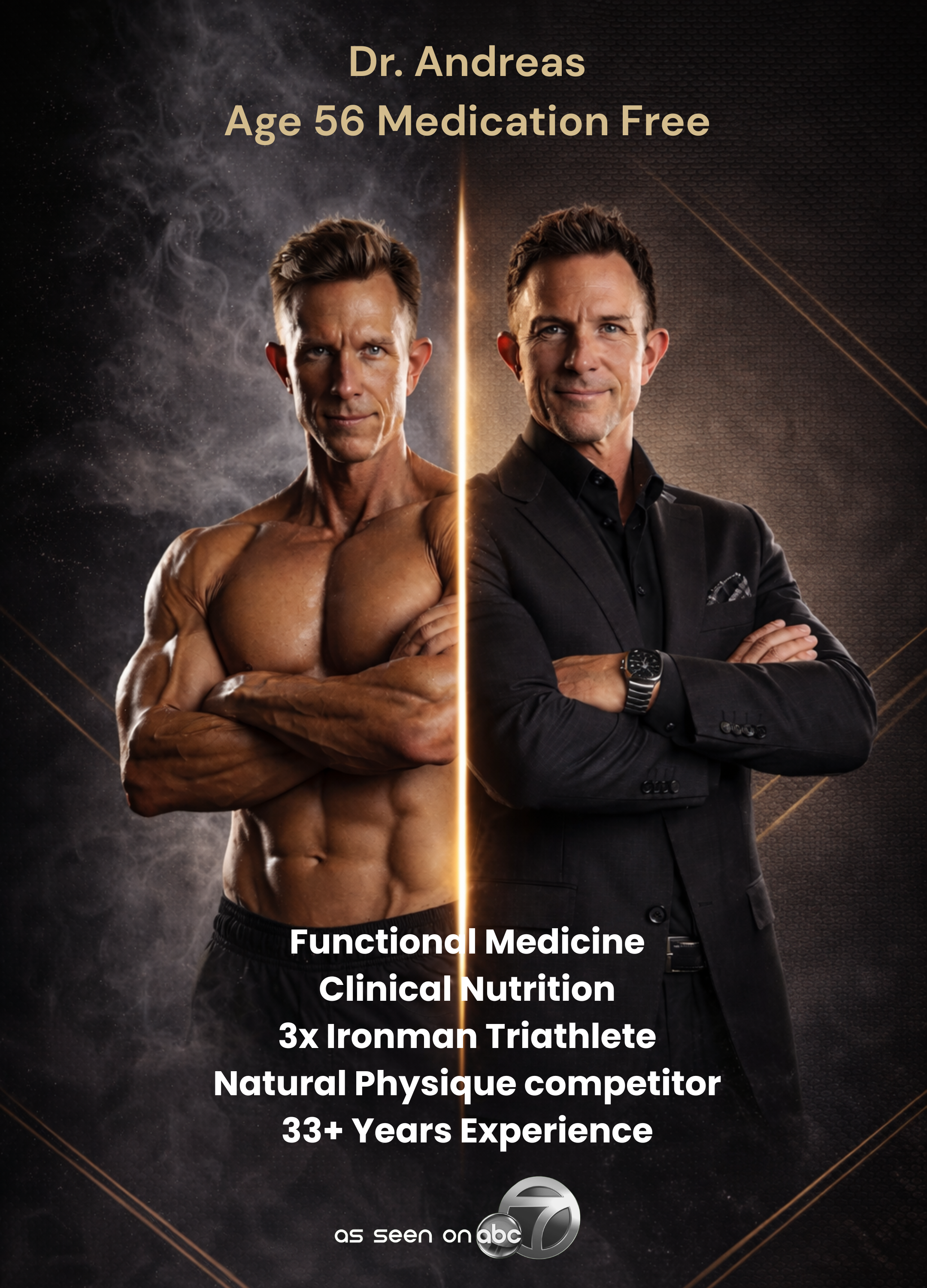
3x Ironman Triathlete, Master's Men's Physique Competitor & Medication FREE at 56
Let me say the thing I am not saying, first, so there is no confusion.
I am not anti-testosterone therapy.
For the right man, under the right conditions, with the right physiology underneath it, testosterone replacement therapy is one of the most genuinely life-changing interventions in modern medicine. I have watched men come back from the dead with it. Not metaphorically. I have watched a man who could not get off the couch at 4 p.m., who had stopped touching his wife, who had quietly written off the second half of his life as a managed decline, get his edge back inside of ninety days. That is real. I will not pretend it isn't.
But I have also watched something else, and I have watched it far more often.
I have watched men inject a perfect molecule into a broken system and feel almost nothing. I have watched their labs go from 280 to 900 and their lives stay exactly the same. Same fatigue. Same fog. Same soft midsection. Same dead libido. And then I watch them do the only thing the system has taught them to do, which is assume the dose was too low. So they raise it. And they raise it again. And now they have a hematocrit problem, an estrogen problem, testicles the size of raisins, and they still feel like hell.
Here is what happened to that man.
He poured premium racing fuel into a broken-down minivan. Clogged injectors. Fouled plugs. A transmission slipping in third. Sludge in the lines. And he is standing at the pump, furious, wondering why 110 octane didn't fix the engine.
Fuel was never the problem.
This article is about the engine.
We Do Not Have A Low Testosterone Epidemic. We Have A Low Standards Epidemic.
Let's start with the honest data, because the data is genuinely alarming and it does not need to be exaggerated.
There is a real, measurable, population-level decline in male testosterone that has nothing to do with individual aging. In 2007, Travison and colleagues published findings from the Massachusetts Male Aging Study showing that a 60-year-old man measured in the 1990s had substantially lower testosterone than a 60-year-old man measured in the 1980s. Same age. Different decade. Lower hormone. The decline persisted after adjusting for age, body mass index, smoking, and health status. It was not simply that men were getting older or fatter. Something else was happening to the entire population at once.
That finding has been replicated. A 2020 analysis of more than 100,000 men in a large Israeli health system found a highly significant age-independent decline in total testosterone across the first two decades of this century, and the authors concluded that rising obesity rates did not adequately explain it. An analysis of nearly 1,000 U.S. Air Force veterans followed over twenty years found that even among men who held their weight steady or lost weight, mean testosterone still dropped 117 ng/dL, about 19 percent, over the study period. The generational decline is roughly 1 percent per year in most datasets, and it stacks on top of the individual aging decline rather than replacing it.
So yes. The trend is real, and it is not a marketing invention.
But here is where I part ways with the clinics running the ads.
The industry looked at that trend and drew one conclusion: men need more testosterone. I look at that trend and draw a different one: something in the environment men are living in is systematically suppressing the signal, and testosterone is the smoke, not the fire.
We have normalized the dad bod. We have normalized six hours of sleep as a badge of honor. We have normalized 3 a.m. cortisol spikes, ultraprocessed convenience, a decade of sitting, a body fat percentage that would have been medically alarming in 1975, and the idea that a man in his fifties is supposed to feel like this. We have normalized trading the body for the career, the family, and the win, and calling that sacrifice noble.
And then, when the bill comes due, we hand him a prescription.
Understand the economics of what just happened. A man with metabolic syndrome, poor sleep, visceral adiposity, chronic inflammation, and declining physical capacity is not a patient. He is an annuity. He will need the statin, and the blood pressure medication, and the metformin, and the PDE5 inhibitor, and the SSRI, and yes, the testosterone. Every one of those is a monthly recurring charge against a problem nobody is being paid to actually solve.
You are the perfect customer. Not because anyone is villainous. Because the entire system is engineered to manage decline profitably rather than reverse it inconveniently.
The rest of this article is about becoming a bad customer.
What Testosterone Actually Is (And What It Is Not)
The single most damaging misunderstanding in men's health is the belief that testosterone is fuel.
It is not fuel. It is a message.
Testosterone is a steroid signaling molecule. It carries no energy of its own. It builds nothing by itself. It is an instruction, and like every instruction, it requires three things to produce an effect: something to send it, something to carry it, and something to receive and act on it.
Break any one of those three and the message dies in transit. And here is the part that should reorganize how you think about your labs: the number on your blood test only measures the first one.
Where it comes from
Testosterone production begins in the brain, not the testicles.
The hypothalamus releases gonadotropin-releasing hormone in pulses. Those pulses hit the pituitary, which releases luteinizing hormone. LH travels to the Leydig cells of the testes, which convert cholesterol into pregnenolone and then, through a series of enzymatic steps, into testosterone. That is the hypothalamic-pituitary-gonadal axis, and it is a thermostat, not a faucet. It is constantly reading the room and adjusting.
Three implications fall out of that immediately.
First, testosterone is built from cholesterol. Men who chase their lipids to the floor with no attention to hormone substrate are not always doing themselves the favor they think they are.
Second, it is pulsatile and circadian. The majority of daily testosterone release in men occurs during sleep. Not during your workout. Not during your morning coffee. During sleep.
Third, and most importantly, the brain is listening. The hypothalamus is exquisitely sensitive to signals about whether this is a good time to be an anabolic, reproductive, high-output male. Chronic inflammatory signaling suppresses it. Chronic energy deficit suppresses it. Chronic sleep disruption suppresses it. Chronic psychological stress and elevated cortisol suppress it. Excess adipose tissue suppresses it through multiple mechanisms at once.
Your body is not broken. It is responding correctly to the information you are giving it. It has concluded, based on the evidence you have provided, that this is not a safe or resourced environment in which to be running a high-testosterone operation.
That is not a hormone deficiency. That is a correct answer to a bad question.
How it travels
Once testosterone is in the bloodstream, most of it is immediately taken out of play.
Roughly 44 to 65 percent binds tightly to sex hormone-binding globulin, or SHBG. Another 30 to 50 percent binds loosely to albumin. Only about 1 to 4 percent circulates completely unbound, and it is that free fraction, plus the loosely bound albumin fraction, that is available to actually enter tissue and do work.
This is why two men can walk in with an identical total testosterone of 550 ng/dL and live in entirely different bodies.
And SHBG is not a fixed constant. It is a metabolically regulated protein produced by the liver, and insulin is one of its most powerful suppressors. Insulin resistance and hyperinsulinemia drive SHBG down. Thyroid status moves it. Estrogen moves it. Liver health, alcohol, aging, and body composition all move it.
If you have only ever been given a total testosterone number, you have been handed a headline without an article. Free testosterone, SHBG, estradiol, and LH are not optional extras. They are the story.
How it is received
This is the step almost nobody talks about, and it is the one that decides everything.
Testosterone does not act on a cell from the outside. Free testosterone diffuses across the cell membrane and binds to the androgen receptor sitting in the cytoplasm. The androgen receptor is a ligand-activated transcription factor, which means it does nothing at all until a hormone docks into its binding domain. When testosterone binds, the receptor changes shape, releases its chaperone proteins, dimerizes, translocates into the nucleus, binds to specific androgen response elements on the DNA, and recruits coactivator proteins to switch genes on.
Read that sequence again, because it explains why this is not a fuel system.
The effect of testosterone is not the hormone. The effect of testosterone is gene transcription. Muscle protein synthesis, erythropoiesis, bone remodeling, neurotransmitter modulation, libido, and lipid handling all occur downstream of that receptor doing its job in the nucleus. That takes hours to days, not minutes.
Two further conversions matter. The enzyme 5-alpha reductase converts testosterone into dihydrotestosterone, which binds the androgen receptor with several times the affinity and drives much of the effect in skin, hair follicles, and prostate. The enzyme aromatase converts testosterone into estradiol, which men genuinely need for bone density, cognition, and libido, but which becomes a problem in excess. Aromatase lives in fat tissue. More adipose tissue means more aromatization, which means more of your testosterone becomes estrogen, which feeds back to the hypothalamus and suppresses the original signal. That is a self-reinforcing loop, and body fat is the engine driving it.
Now the part that ought to be on the wall of every men's clinic in America.
Receptors are not identical between men.
The androgen receptor gene contains a variable CAG repeat sequence, typically between 9 and 35 repeats. The more repeats a man carries, the less sensitive his receptor is, and the higher his circulating testosterone must be to produce the same biological effect. This is not fringe science. It is well characterized in the andrology literature, and it has direct clinical consequences. A 2025 study presented to the Society for Endocrinology examined men on testosterone therapy and found that non-responders carried significantly more CAG repeats than responders, averaging 21.8 versus 18.7. Critically, the researchers found no correlation between response and total, free, or bioavailable testosterone. The number did not predict who felt better. The receptor did.
And when researchers looked directly at muscle, they found the same thing. In a study of resistance-trained young men, Morton and colleagues measured circulating testosterone, free testosterone, DHT, growth hormone, IGF-1, intramuscular free testosterone, intramuscular DHT, and 5-alpha reductase expression, and compared the highest and lowest responders to twelve weeks of training. What predicted who actually grew muscle was not a single circulating hormone. It was intramuscular androgen receptor content.
The lock matters more than the key.
The Study: Why Roughly One In Three Men Get Nothing
Here is the research that should be handed to every man before he signs the first prescription.
In 2020, Farber, Vij, and Shoskes at the Cleveland Clinic published a retrospective review in Translational Andrology and Urology of 60 hypogonadal men started on testosterone therapy. They deliberately used testosterone pellets rather than injections or gels, specifically so that inadequate or erratic dosing could not be blamed for failure. Pellets deliver reliable, sustained levels. Every man in the study got his number corrected.
Thirty-nine men, 65 percent, felt symptomatic improvement and stayed on therapy for a median of more than 40 months.
Twenty-one men, 35 percent, felt nothing meaningful and quit within a median of about four months.
Now the finding that matters. There was no significant difference between the two groups in age. There was no significant difference in pre-treatment testosterone levels. The responders and the non-responders started from statistically indistinguishable hormone numbers.
What separated them was their burden of systemic disease.
The researchers scored each man on a validated seven-domain composite called the ACTIONS phenotype, covering anxiety and depression, cardiovascular disease, low testosterone, insulin resistance and diabetes, obesity, neurologic disease, and obstructive sleep apnea. The men who quit averaged a score of 8. The men who thrived averaged 4.1. That difference was highly statistically significant, and it held regardless of age.
Read the list of domains again. Sleep apnea. Insulin resistance. Obesity. Cardiovascular disease. Mood. These are the foundation.
The authors' own conclusion is the entire thesis of my practice, written by urologists in a peer-reviewed journal: ideal outcomes may come from multimodal therapy that includes lifestyle modification and optimization of conditions such as diabetes, cardiovascular disease, and sleep apnea.
I want to be straight with you about the strength of this evidence, because I would rather you be able to defend this than be impressed by it. Sixty men is a small study. It is retrospective. It used one delivery method at one institution. It is preliminary work, and the authors say so.
But it does not stand alone. Rhoden and Morgentaler tracked 127 men on testosterone therapy in clinical practice and found that only about 63 percent completed twelve months with subjective benefit, with roughly 27 percent discontinuing as non-responders. Two independent datasets, different methods, different institutions, both landing near the same place.
Roughly one man in three corrects the number and does not get the life.
That is not a dosing failure. That is an environment failure.
Testosterone Is Not An Entitlement. It Is A Response.
Here is the reframe I want you to carry out of this article.
You are not entitled to high testosterone because you are a man. You are not entitled to it because you are 45 and you used to have it. You do not get it because you deserve it.
You demand it. Physiologically. With behavior your body is forced to answer.
Testosterone is your body's response to a specific question it asks every single day: given the load, the recovery, the nutrient availability, the inflammatory state, and the safety of this environment, what kind of male should we be building?
You do not get to argue with the answer. You get to change the inputs.
Here are the inputs that matter, in the order they matter.
One: Sleep, because that is where the hormone is actually made
The majority of daily testosterone release in men occurs during sleep. This is not a wellness talking point. It is basic endocrinology.
Leproult and Van Cauter, at the University of Chicago, put healthy young men in a laboratory, gave them ten hours in bed for three nights, then restricted them to under five hours a night for eight nights, sampling blood every 15 to 30 minutes around the clock. One week of short sleep dropped their daytime testosterone by 10 to 15 percent, with the lowest levels in the afternoon and evening, which is exactly when an executive needs to be sharp. These were lean, healthy, screened young men in their mid-twenties. The study was small, ten men, but it was tightly controlled, and the effect was unmistakable.
One week. Ten to fifteen percent. In men whose engines were not yet broken.
Now add ten years, twenty extra pounds of visceral fat, and untreated sleep apnea, which independently fragments sleep architecture and is one of the seven domains that predicted therapy failure in the Cleveland Clinic data. Sleep apnea in a heavy man is a testosterone-suppressing machine, and testosterone therapy can worsen it.
I do not care how good your protocol is. If you are sleeping five and a half hours and snoring through it, you are attempting to withdraw from an account you are refusing to fund.
Two: Insulin sensitivity and visceral fat, because they attack from three directions at once
Excess adipose tissue, and visceral fat in particular, suppresses testosterone through at least three simultaneous mechanisms.
It aromatizes testosterone into estradiol, which then feeds back on the hypothalamus and pituitary to shut down the original signal. It generates chronic low-grade inflammatory signaling that directly suppresses hypothalamic GnRH output. And it drives insulin resistance, which lowers SHBG and disrupts the transport system.
The good news is that this loop runs in reverse just as reliably.
A systematic review and meta-analysis in the European Journal of Endocrinology examined the effect of weight loss on male sex hormones across 24 studies. Low-calorie dietary intervention raised total testosterone by an average of about 2.9 nmol/L, roughly 83 ng/dL. Bariatric surgery, which produces far greater weight loss, raised it by about 8.7 nmol/L, roughly 250 ng/dL. The degree of weight loss was the single best predictor of the testosterone rise. Estradiol fell, and gonadotropins rose, meaning the brain's signal came back online.
A separate 36-month prospective study quantified it more precisely: for every kilogram of weight lost, total testosterone rose approximately 0.6 percent in men.
Do the arithmetic on your own body. That is a natural, no-needle, no-black-box gain that a very large number of men on prescriptions never bothered to attempt, because nobody offered it to them and it was harder than a pharmacy.
Three: Muscle and mechanical load, because that is where the receptors live
This is where I have to be honest with you in a way that most content in this space is not.
Resistance training does not reliably raise your resting testosterone. Acute training bouts produce a transient spike, but the well-controlled longitudinal data, including a 21-week training study in younger and older men, show that baseline testosterone often remains essentially unchanged.
If lifting raised your resting testosterone dramatically, every powerlifter in America would be at 1,200 ng/dL. They are not.
So why do I put training near the top of the list?
Because the number was never the point. Go back to Morton's work: intramuscular androgen receptor content, not circulating hormones, predicted who built muscle. Training changes what your tissue can do with the testosterone you already have. It changes receptor content. It builds skeletal muscle, which is your largest glucose disposal site and therefore your primary defense against the insulin resistance that lowers SHBG and suppresses the axis. It reduces the adipose mass that is aromatizing your hormone away.
Training does not raise the volume of the message. It repairs the antenna.
And functional capacity is not decoration. VO2 max is among the strongest predictors of all-cause mortality we have. Strength and lean mass predict independence, resilience, and survival. Muscle is the organ of longevity, and it is the only organ you can add to yourself on purpose.
Four: Stress, load management, and the pregnenolone question
The HPA axis and the HPG axis are in a negotiation, and the HPA axis wins.
Chronic elevated cortisol suppresses gonadotropin-releasing hormone output at the hypothalamus. That is a survival feature. An organism under sustained threat is not supposed to prioritize reproduction and tissue building. Your body cannot tell the difference between a predator and a quarterly board meeting that has lasted eleven years.
For the high-achieving man, this is usually the hardest one, because the exact behavior that built his company is the behavior that is dismantling his physiology. He does not have a discipline problem. He has a discipline allocation problem. He is applying world-class discipline to the P&L and none of it to the vessel that has to carry the P&L for another thirty years.
Five: Substrate, nutrient status, and the honest limits of supplementation
You cannot build a steroid hormone without cholesterol, adequate protein, adequate total energy, and sufficient micronutrient cofactors. Chronic underfeeding, particularly the low-fat, low-calorie, high-cardio approach many men default to when they finally decide to get serious, can lower testosterone rather than raise it.
Vitamin D, zinc, and magnesium all participate in androgen physiology, and correcting a genuine deficiency in any of them can meaningfully improve status. But I want to be precise here, because this is where the supplement industry lies to you: correcting a deficiency is not the same as boosting a normal level. If you are replete, more will not make you superhuman. The evidence for most over-the-counter testosterone boosters in men who are not deficient is weak to nonexistent, and the marketing budget is inversely proportional to the data.
Test. Correct what is actually low. Stop buying hope in a bottle.
The Honest Ledger On TRT Itself
I told you at the top I am not anti-TRT. I am also not going to soft-pedal the costs, because a man cannot make a real decision on a marketing brochure.
If you have read my previous article on the black box, you know the history. The FDA required a cardiovascular safety trial, and the TRAVERSE study delivered it in 2023. The headline result was genuinely reassuring: in 5,246 men with hypogonadism plus existing cardiovascular disease or high cardiovascular risk, testosterone therapy was noninferior to placebo for major adverse cardiac events. Cardiovascular death, nonfatal heart attack, and nonfatal stroke were not elevated. That mattered, and it corrected a decade of overstated fear.
But read the rest of the table.
Three adverse events occurred at significantly higher rates in the testosterone group. Atrial fibrillation, 3.5 percent versus 2.4 percent. Acute kidney injury, 2.3 percent versus 1.5 percent. Pulmonary embolism, 0.9 percent versus 0.5 percent. Nonfatal arrhythmias requiring intervention, 5.2 percent versus 3.3 percent. The investigators themselves described these events as unexpected, and stated that their findings support using testosterone with caution in men with prior thromboembolic events.
Now the details that rarely make the summary.
The study used a 1.62 percent transdermal gel. Not injections. Not pellets. Not the supraphysiologic protocols being run in cash-pay clinics across this country.
Mean treatment duration was roughly 22 months, with mean follow-up around 33 months. Under two years of actual therapy. If you start TRT at 45 and intend to stay on it, you are proposing a forty-year exposure on the strength of a two-year trial.
The population was specific: mean age above 63, mean BMI around 35, and roughly 70 percent with type 2 diabetes. That is a sick cohort, which was the point of a safety trial, but it limits how confidently the results transfer to a healthy 48-year-old.
And in fairness, because I want you to know the counterargument before someone uses it on you: a subsequent analysis noted the trial ran through the COVID pandemic, and that COVID infection itself was associated with substantially elevated risk of venous thromboembolism, atrial fibrillation, and acute kidney injury in the cohort, which may partly confound those specific signals. That is a legitimate objection. It is also not a clean exoneration. The honest summary is that the cardiac safety picture is far better than we feared and the thrombotic and arrhythmic picture is unresolved.
Then there are the effects nobody disputes, because they are not side effects at all. They are the drug working exactly as designed.
Exogenous testosterone suppresses your own production. That is not a malfunction. The hypothalamus detects adequate circulating androgen and shuts down GnRH, which shuts down LH, which shuts down the Leydig cells. Testicular volume decreases. Spermatogenesis declines, and for some men fertility does not fully return. Recovery of the axis after prolonged suppression can take many months, and is not guaranteed.
Add the predictable dose-dependent effects: elevated hematocrit and blood viscosity, acne, accelerated pattern hair loss in genetically predisposed men, potential worsening of sleep apnea, and estradiol management that turns into its own ongoing project.
And the structural cost that men consistently underestimate: for most men, this is a lifelong commitment. You are not borrowing testosterone. You are trading your own production for a supply chain, permanently.
None of that means never. It means eyes open.
So When Is TRT The Right Call?
I will give you the straight answer, because vague answers here are cowardice.
Testosterone therapy is genuinely appropriate and often transformative for men with true, confirmed hypogonadism, particularly organic causes: primary testicular failure, Klinefelter syndrome, pituitary or hypothalamic pathology, prior chemotherapy or radiation, traumatic testicular injury, or long-term opioid or glucocorticoid-induced suppression. In those men, no amount of sleep hygiene and deadlifting will restore a gland that cannot function. Withholding therapy from them is not virtue. It is negligence.
It is also reasonable for a defined subset of men who have genuinely done the foundational work, corrected the sleep, the body composition, the insulin resistance, and the inflammatory load, and who still sit in a clearly deficient range with clearly deficient symptoms. That man is not taking a shortcut. He is taking the last remaining step, and his physiology is now prepared to actually use it. He is the man who ends up in the 65 percent, not the 35 percent.
And if you are already on TRT and not getting what you were promised, please hear this clearly, because it is not a rebuke: you have not failed, and you have not wasted your time. You were most likely never told about the engine. The foundation is still available to you today, on therapy, and building it is exactly how men on TRT go from mediocre response to the result they were sold. Optimizing underneath the prescription is not an admission of defeat. It is the missing half of the protocol.
That is what I mean when I say I am pro-testosterone in the right order.
The Order Of Operations
If you want a practical sequence, here it is.
Before anything else, get a complete picture, not a headline. Total testosterone drawn fasting in the morning and confirmed on a second draw, free testosterone, SHBG, estradiol by a sensitive assay, LH and FSH, prolactin, complete blood count with hematocrit, comprehensive metabolic panel, fasting insulin and HbA1c, a full thyroid panel, hs-CRP, ferritin and iron studies, and vitamin D. If your LH is high, the problem is in the testicle. If your LH is low or normal alongside low testosterone, the problem is upstream, in the brain, and upstream problems are frequently the ones that respond to environment.
Then, in this order:
Fix sleep first. Duration, consistency, and quality. Screen for apnea if there is any snoring, any witnessed pauses, any morning headaches, or a neck circumference and body composition that make it likely. This is not optional.
Attack visceral fat and insulin resistance. This is the highest-yield metabolic lever available to you and the one with the best-documented effect on natural testosterone.
Train for load and capacity. Progressive resistance training as the non-negotiable core, with enough conditioning to build genuine cardiorespiratory reserve.
Feed the machine. Adequate protein, adequate total energy, adequate dietary fat, real food. Stop under-eating and over-cardio-ing.
Manage the load on your nervous system with the same seriousness you manage your calendar.
Correct actual, measured nutrient deficiencies. Skip the proprietary blends.
Re-test after a real, sustained effort. Not six weeks. Give it three to six months of genuine execution.
Then, and only then, with a complete picture and a prepared physiology, have the therapy conversation with a physician who will look at more than one number.
There Is No Shortcut. There Is Only A Price Tag On The Detour.
Testosterone therapy is the current headline, but the pattern is older than the drug. It will be peptides next, and I will write that article too, and the conclusion will be identical. It will be senolytics after that, and then something else, and each one will arrive with a founder story, a podcast tour, and a promise that this time the work is optional.
The work is never optional.
Every biological shortcut has a price. Sometimes the price is money. Sometimes it is a hematocrit draw every quarter and testicles that have gone quiet. Sometimes the price is subtler and worse: the years you spent chasing the molecule instead of building the man, while the actual problem compounded underneath.
And here is the thing that the shortcut can never give you, no matter how good the compound gets. The discipline that builds the body is the same discipline that runs the company, holds the marriage, and raises the kids. You cannot inject that. It does not come in a vial. It is earned in the specific, unglamorous, repeated decisions that nobody claps for.
That is the actual return. The energy, the drive, the libido, the clarity, the confidence with your shirt off and your presence in the room, those are downstream of the work, not substitutes for it.
Anyone selling you longevity without the work is not selling you health. They are selling you a subscription to the latest craze, and you are the product.
You are not entitled to your testosterone.
Go demand it.
It's Only Halftime.
Ready To Take Charge of Your Health With the Most Comprehensive Natural Approach to Mens Health?
If you'd like to go deeper — to uncover the root causesbehind your energy, hormones, metabolism, and performance — I invite you to book a complimentary consultation.
Together, we'll review your health history and goals and determine if our Wealthy Body Protocol based on your lab analysis, genetics, and lifestyle data is right for you!
👉Click here to apply: limited clients accepted each quarter
To learn more about our Wealthy Body Protocol and success stories visit www.ItsOnlyHalftime.com/wbp, where we help men like you turn your second half into your best half naturally!
Finish Strong,
Dr. Andreas
Still Kickin' A** Medication Free at 56 Despite What the "Narrative" Would Like You To Believe!
Medical Disclaimer:
The information provided in this article is for educational and informational purposes only and is not intended as medical advice. It should not replace professional consultation, diagnosis, or treatment. Always consult your healthcare provider before making any changes to your health regimen or lifestyle.
References
Farber NJ, Vij SC, Shoskes DA. Failure of testosterone replacement therapy to improve symptoms correlates with burden of systemic conditions. Transl Androl Urol. 2020;9(3):1108-1112.
Rhoden EL, Morgentaler A. Symptomatic response rates to testosterone therapy and the likelihood of completing 12 months of therapy in clinical practice. J Sex Med. 2010.
Travison TG, Araujo AB, O'Donnell AB, Kupelian V, McKinlay JB. A population-level decline in serum testosterone levels in American men. J Clin Endocrinol Metab. 2007;92(1):196-202.
Mazur A, Westerman R, Mueller U. Is rising obesity causing a secular (age-independent) decline in testosterone among American men? PLoS One. 2013;8(10):e76178.
Leproult R, Van Cauter E. Effect of 1 week of sleep restriction on testosterone levels in young healthy men. JAMA. 2011;305(21):2173-2174.
Corona G, Rastrelli G, Monami M, et al. Body weight loss reverts obesity-associated hypogonadotropic hypogonadism: a systematic review and meta-analysis. Eur J Endocrinol. 2013;168(6):829-843.
Morton RW, Sato K, Gallaugher MPB, et al. Muscle androgen receptor content but not systemic hormones is associated with resistance training-induced skeletal muscle hypertrophy in healthy, young men. Front Physiol. 2018;9:1373.
Ahtiainen JP, Hulmi JJ, Kraemer WJ, et al. Heavy resistance exercise training and skeletal muscle androgen receptor expression in younger and older men. Steroids. 2011;76(1-2):183-192.
Lincoff AM, Bhasin S, Flevaris P, et al. Cardiovascular safety of testosterone-replacement therapy. N Engl J Med. 2023;389:107-117. (TRAVERSE)
Zitzmann M, et al. Cardiovascular safety of testosterone therapy: insights from the TRAVERSE trial and beyond. A position statement of the European Expert Panel for Testosterone Research. Andrology. 2025.
Tirabassi G, et al. Influence of CAG repeat polymorphism on the targets of testosterone action. Int J Endocrinol. 2015.
Society for Endocrinology BES 2025. Androgen receptor sensitivity assessed by genetic polymorphism in the testosterone treatment of male hypogonadism. Endocrine Abstracts 109 OC3.5.